Sign up today

Sign up today
Softphone APP for Android &IOS

RG Richardson Communications News

I am a business economist with interests in international trade worldwide through politics, money, banking and VOIP Communications. The author of RG Richardson City Guides has over 300 guides, including restaurants and finance.

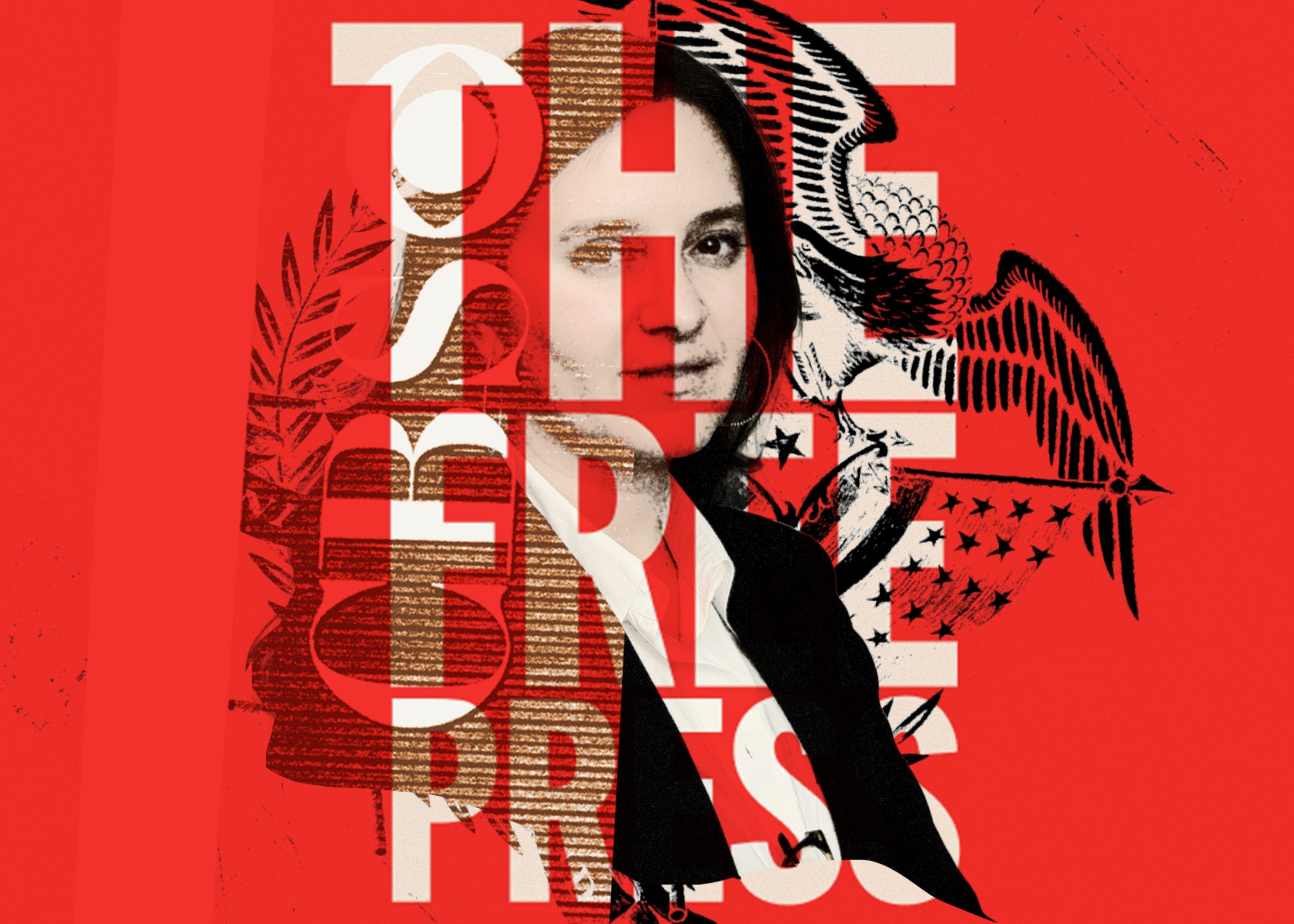
Bari Weiss, CBS News, and the Triumph of Faux Balance

Bari Weiss, CBS News, and the Triumph of Faux Balance
(Composite by Hannah Yoest / Photos: GettyImages / Shutterstock)

MONDAY MORNING BROUGHT a long-anticipated announcement: The Free Press, the web publication started by Bari Weiss in 2021, has been acquired by Paramount, and Weiss herself has been made the editor-in-chief of Paramount’s CBS News.

Discussing the reported $150 million purchase in a statement, the chairman and CEO of Paramount, billionaire tech scion David Ellison, called the Free Press “one of the most dynamic news organizations in the country.”

Weiss, in her own message to her new CBS News colleagues, said that she wants to help the network news division focus on journalism that holds both political parties “to equal scrutiny,” and that “embraces a wide spectrum of views and voices.” At the Free Press, which she says “will remain independent” within Paramount, she wrote an editorial reiterating these themes.

But now that the deal is sealed, what will Paramount be getting for its money? Does the actual record of the Free Press show fidelity to the principles Ellison and Weiss proclaim? And as Weiss—who has no experience working in network TV, and whose video products have not particularly thrived—steps into her new role at CBS News, what can we expect based on her leadership at her own media project?

The outlook is not great. While the Free Press has published some undeniably high-quality work and platformed interesting voices, its position as a fellow traveler of the right in the culture wars has increasingly come at the expense of its stated goals: journalistic independence, open-mindedness, intrepid truth-seeking, upholding a commitment to liberal values. What’s more, Weiss’s triumph is owed, at least in part, to a president’s abuse of power to trample those values and strong-arm his critics. One would expect that someone who holds true to core journalistic principles would have spoken out against those tactics. The Free Press has largely remained silent.

From independent dissident to fellow traveler of the right

I speak as someone who, a few years ago, was unabashedly Team Bari. I wrote several sympathetic articles about Weiss, taking her side against what I thought, and still think, was unfair and over-the-top hostility generated by her status as a right-of-center pundit at the New York Times, and often manifesting itself in Twitter pile-ons based on uncharitable readings of innocuous statements.1 (I should add, by way of full disclosure, that Weiss and I briefly met a few times and interacted cordially on Twitter, and that she shepherded two of my articles as an editor at the Wall Street Journal and at the New York Times in 2017 and 2018.)

I was sympathetic when Weiss resigned from her Times job in July 2020 after the ouster of editorial page editor James Bennet—despite some reservations when a journalist from Weiss’s own center-right side, the late Sol Sternreported that she was extremely cagey when asked for specifics of either the bullying or the censorship she said she had endured. Stern also took Weiss to task for failing to push back when MAGA activists, and Donald Trump himself, weaponized her critique of the Times as a talking point against “Fake News.” Nonetheless, he concluded by wishing Weiss well in her next foray into “journalism ‘without fear or favor,’” a position I was glad to second.

Weiss had been, to that point, a true independent. While her criticism usually punched left, she was willing to challenge critics of the illiberal left who had little to say about the sins of the right.2 Her August 2017 New York Times column about the hijacking of the Women’s March by far-left radicals acknowledged that “the nightmare of the Trump administration” was by far the bigger story (which, she argued, made it all the more essential for the opposition to avoid big missteps). And in November of that year, Weiss wrote a hard-hitting piece about the threat Trumpism posed to conservative think tanks and magazines. Discussing Sol Stern’s departure from one such publication, City Journal, Weiss quoted from his resignation letter assailing “the magazine’s intellectual abdication on the most urgent crisis facing the nation today: the election of an unfit, dangerous man to the presidency, plus the myriad ways in which the forces of Trumpism . . . are tearing the country apart.”

Eight years later, these critiques read like a prescient description of Weiss’s own media venture at a time when the same man in the White House is even more unfit and dangerous, the “forces of Trumpism” are even more extreme, and “the nightmare of the Trump administration” this time around makes the first version seem almost normal.

RG Richardson Economic Interactive Dictionary: Searching (Money and Banking Interactive Guides) eBook :

RG Richardson Economic Interactive Dictionary: Searching in 10 languages (Money and Banking Interactive Guides) eBook : Richardson, R.G.: Amazon.ca: Kindle Store

Economic Interactive Dictionary-Multi-language Chinese, English and German. With the power of the internet, this guide provides over 9900 links through 8 search engines to definitions, terms, charts, videos and graphs. Never out of date! Increase your financial literacy! Interactive City Guides searching in multiple languages. Job search, interactive notes, dictionaries, shopping and real estate guides. Using the power of the internet this guide is all about 9900 preset searches keeping you up to date about your city.

The Day Trump Feared… Today We Make History Together!!!

The Day Trump Feared… Today We Make History Together!!!


BEN MEISELAS AND MEIDASTOUCH NETWORK


OCT 18


READ IN APP

By Ben Meiselas

Today we show the world that in America we are not scared of Trump and his pathetic, vile regime.

Today we show the world that America does not want a tyrant and does not want a king.

Today, let’s make history with the largest peaceful protest ever.

Tens of millions of Americans will be protesting alongside so many others around the world.

This is the day Trump feared.

When future generations ask what you did when authoritarianism took hold in America, tell them you weren’t on the sidelines. Today, you will make your mark on history, marching side by side at the No Kings Protest.

But as historic and great as today will be, I know it will only be the beginning.

The peaceful protests will continue to grow and grow like nothing the world has ever seen.

The powerful statement we will make today will be an overwhelming repudiation of the Trump regime. It will remind everyone who holds the power — the people hold the power, not the right-wing oligarchs.

One of the greatest privileges I’ve had at the MeidasTouch Network has been flipping the script on news coverage with our platform. Whereas corporate news refused to cover the protests and intentionally suppressed them, we went all in — amplifying the work of grassroots groups and activists fighting for democracy and going all in on our coverage of the protests.

We showed the world that people want to see coverage of what matters to them, and these mass protests deserve significant coverage. We’ve never followed corporate news framing. We’ve always led our coverage by listening to you.

As in the past, the MeidasTouch Network will be the main streaming platform for the No Kings Protests on our YouTube channel. Make sure to check it out. We’ve been working closely with the lead organizers of No Kings to make sure we can assist in amplifying the coverage of their efforts in any way possible. This is why we built this platform — it’s for days like today.

So go out there and have fun. Make sure to always remain peaceful. Never let the regime take away your love, your joy, or your empathy. Always remember we are in this together — and there are more of us than there are of them. I am so proud of you and everything you’ve done to help make this country and this world a better place.

If you are able to subscribe today to this Substack, or gift subscriptions to people you know, that would be great. We’ve stayed the top digital news network in the country thanks to you. We consistently beat Fox in video views, and we beat Joe Rogan in audio downloads — thanks to you. We hope you enjoy our members-only content as subscribers. Please subscribe today if you can.

Regardless, I can’t wait to hear about your experience at the No Kings Protest today and see all the pictures and videos. Have a wonderful No Kings Day, everyone.

Global Renewables to Double by 2030 as U.S. Slumps, China and India Step Up

Global Renewables to Double by 2030 as U.S. Slumps, China and India Step Up
October 7, 2025
Reading time: 3 minutes

Full Story: The Energy Mix
Mitchell Beer


Alexander Mills/Unsplash


While global renewable electricity installations will grow at a slightly slower pace than modellers previously expected between 2025 and 2030, total capacity is still on track to double by decade’s end, with solar leading the way, the International Energy Agency says.

Countries will add 4,600 gigawatts (that’s 4,600 billion watts) of new renewable generation capacity over the next five years, “roughly the equivalent of adding China, the European Union, and Japan’s power generation capacity combined to the global energy mix,” the IEA concludes in its Renewables 2025 forecast released this morning. Solar photovoltaics account for nearly 80% of the increase, and renewable power is expected to grow faster than it did over the last five years in more than 80% of the world’s countries.

Global wind capacity will nearly double to more than 2,000 GW, with China and the European Union leading new deployments, and the IEA expects hydropower to account for 3% of new renewable power through 2030.

All told, renewable energy capacity worldwide will grow 2.6- to 2.8-fold from 2022 levels by 2030, falling short of the tripling that countries promised at the COP28 climate summit in Dubai. “This target can still be brought within reach if countries adopt enhanced policies to bridge gaps in both ambition and implementation,” the report states.

In an analysis published just hours ahead of the IEA release, researchers at the Ember energy think tank said solar and wind outpaced the growth in global electricity demand in the first half of this year, overtaking coal as a source of power supply for the first time.

“We are seeing the first signs of a crucial turning point,” Ember Senior Electricity Analyst MaƂgorzata Wiatros-Motyka said in a release. “Solar and wind are now growing fast enough to meet the world’s growing appetite for electricity. This marks the beginning of a shift where clean power is keeping pace with demand growth.”

The IEA expects renewables deployment to be 5% slower this year than it projected in October 2024, a shift it attributes to policy changes in the United States and China. “The forecast for the United States is revised down by almost 50%,” the report states, after the Trump administration phased out federal renewable energy tax credits ahead of schedule, imposed severe import restrictions on renewables industries, suspended new offshore wind leasing, and curtailed wind and solar leasing on federal lands.

“China’s shift from fixed tariffs to [renewable energy procurement] auctions is impacting project economics and lowering growth expectations,” the IEA adds. “Nonetheless, China continues to account for nearly 60% of global renewable capacity growth and is on track to reach its recently-announced 2035 wind and solar target five years ahead of schedule, extending its track record of early delivery.”

India, the EU, and most emerging and developing economies have all accelerated their renewable adoption since the IEA’s last data release a year ago. India is in good shape to meet its 2030 target and become the world’s second-biggest renewable energy market, achieving a 2.5-fold increase in capacity in just five years. Deployment is accelerating in Southeast Asia and Europe, while the forecast for the Middle East and North Africa is up 25%, led mainly by solar development Saudi Arabia.

The IEA points to some storm clouds for the renewable energy sector. Growth in wind power development is hampered by supply chain issues, rising costs, and permitting delays, and major solar and wind manufacturers are still losing money despite “surging” installations world-wide. An excess of solar modules has driven prices down by more than 60% in China since 2023, while wind manufacturers outside China reported cumulative losses of US$1.2 billion last year.

But despite those headwinds, the IEA said one-fifth of the large renewable developers it surveyed had increased their deployment targets over the last year, while three-quarters kept to their previously-stated goals. At a time of uncertain government policies, corporate power purchase agreements (PPAs) have been an important point of stability, delivering 30% of the expansion the IEA anticipates through 2030.


One of 19 norovirus outbreaks on cruise ships


Royal Caribbean cruise

Jean-Francois Monier/Getty Images

The poop deck was overflowing on a Royal Caribbean cruise from San Diego to Miami last month, as 94 guests and four crew members (about 5% of the ship’s manifest) came down with norovirus during the two-week voyage.

The flare-up was one of 19 norovirus outbreaks on cruise ships so far this year—already one more than last year and five more than in 2023, per the New York Times.

Norovirus is highly contagious, making cruise ships—where thousands of passengers in tight quarters can get to know their fellow travelers intimately on the conga line—particularly vulnerable to its spread.—AE

Porting Phone Number


Porting Phone Number: What You Need to Know


Thinking about switching to Voice over Internet Protocol (VoIP) but want to keep your current phone number? Good news: you can! Porting your phone number to VoIP.ms is a smart way to retain your current number while upgrading to a modern VoIP system.

Whether you’re switching from a landline or another VoIP provider, understanding number portability helps ensure a smooth, hassle-free transition.

While this guide focuses on VoIP, it’s worth noting that number portability as a whole is gaining traction, especially in the mobile sector.

According to The Business Research Company, the global mobile number portability market is projected to grow from $2.14 billion in 2024 to $2.27 billion in 2025. This trend reflects growing consumer demand for flexible telecom options across all platforms.


JPMorgan Chase to invest $10 billion into key industries - Really?????

JPMorgan Chase to invest $10 billion into key industries


JPMorgan Chase says it will invest $10 billion into industries critical for national security
Published Mon, Oct 13 20256:00 AM EDTUpdated 33 Min Ago

Hugh Son@hugh_son
ShareShare Article via FacebookShare Article via TwitterShare Article via LinkedInShare Article via Email
Key Points
JPMorgan Chase on Monday said it is launching a decade-long plan to help finance and take direct stakes in companies it considers crucial to U.S. interests.
The bank said in a statement it would invest up to $10 billion into companies in four areas: defense and aerospace, “frontier” technologies including AI and quantum computing, energy technology including batteries, and supply chain and advanced manufacturing.
That is part of its broader effort, dubbed the Security and Resiliency Initiative, in which JPMorgan said it will finance or facilitate $1.5 trillion in funding for companies it identifies as crucial, an amount is said was 50% more than a previous plan.


In this articleJPM+7.38 (+2.45%)
Follow your favorite stocksCREATE FREE ACCOUNT

watch now
VIDEO05:14
JPMorgan Chase says it will invest $10 billion into industries critical for national security


JPMorgan Chase on Monday said it is launching a decade-long plan to help finance and take direct stakes in companies it considers crucial to U.S. interests.

The bank said in a statement it would invest up to $10 billion into companies in four areas: defense and aerospace, “frontier” technologies including artificial intelligence and quantum computing, energy technology including batteries, and supply chain and advanced manufacturing.


The money is part of a broader effort, dubbed the Security and Resiliency Initiative, in which JPMorgan said it will finance or facilitate $1.5 trillion in funding for companies it identifies as crucial. It said the total amount is 50% more than a previous plan.

“It has become painfully clear that the United States has allowed itself to become too reliant on unreliable sources of critical minerals, products and manufacturing — all of which are essential for our national security,” JPMorgan CEO Jamie Dimon said in the release.

As the biggest American bank by assets and a Wall Street juggernaut, JPMorgan was already raising funds and lending money to companies in those industries. But the move helps organize the company’s activities around national interests at a time of heightened tensions between the U.S. and China.

On Friday, markets tumbled as President Donald Trump announced new tariffs on Chinese imports after the major U.S. trading partner tightened export controls on rare earths.

In the release, Dimon said the U.S. needs to “remove obstacles” including excessive regulations, “bureaucratic delay” and “partisan gridlock.”


JPMorgan said that within the four major areas, there were 27 specific industries it would look to support with advice, financing and investments. That includes areas as diverse as nanomaterials, autonomous robots, spacecraft and space launches, and nuclear and solar power.

“Our security is predicated on the strength and resiliency of America’s economy,” Dimon said. “This new initiative includes efforts like ensuring reliable access to life-saving medicines and critical minerals, defending our nation, building energy systems to meet AI-driven demand and advancing technologies like semiconductors and data centers.”

The bank said it would hire an unspecified numbers of bankers and create an external advisory council to support its initiative.