Sign up today

Sign up today
Softphone APP for Android &IOS

RG Richardson Communications News

I am a business economist with interests in international trade worldwide through politics, money, banking and VOIP Communications. The author of RG Richardson City Guides has over 300 guides, including restaurants and finance.

Amazon’s $2.5 billion settlement over Prime subscriptions: When will payments be sent out?

Amazon’s $2.5 billion settlement over Prime subscriptions: When will payments be sent out?

Amazon’s $2.5 billion settlement over Prime subscriptions: When will payments be sent out?

Current Time 0:42
Duration 1:39

(NEXSTAR) — It’s been more than a month since Amazon reached a $2.5 billion settlement after the Federal Trade Commission (FTC) accused the online retailer of using “deceptive methods” to register millions of customers for paid Prime subscriptions.

So, when will you receive your part of the settlement?

Ultimately, that depends on whether you qualify. The federal agency has, however, indicated when payments may be dispersed.

Here’s what to know.

What is the $2.5 billion settlement about?

The accusation by the FTC is two-fold: first, Amazon signed up “millions of consumers” for Prime subscriptions without their permission, then “knowingly made it difficult for consumers to cancel.”

Per the FTC’s September announcement, Amazon will not only have to fork over $2.5 billion (more on that in a moment), the company must “cease unlawful enrollment and cancellation practices for Prime.”

That includes making “a clear and conspicuous button for customers to decline Prime” and doing away with the button, “No, I don’t want Free Shipping.” Amazon also needs to outline the cost of Prime during the subscription process, as well as the date and frequency of when the customer will be charged, whether it will auto-renew, and how to cancel.

The Court That Let Democracy Bleed

The Court That Let Democracy Bleed
MeidasTouch Network and
Michael Cohen
Jul 15, 2025

Guest article by Michael Cohen


In a chilling, unsigned decision, the SCOTUS empowers Trump’s mass purge of the Education Department, shredding congressional authority, civil rights protections, and democratic accountability.

Let’s stop pretending the Supreme Court is still an impartial arbiter of constitutional law. On Monday, they confirmed what many of us already feared: that the highest court in the land has become little more than a rubber stamp for executive overreach, so long as it’s done in the name of “small government.” In an unsigned, unexplained order—the judicial equivalent of ghosting the Constitution—the Court cleared the way for mass layoffs at the Department of Education, allowing President Trump’s long-telegraphed plan to effectively dismantle the agency to proceed unchecked.

No full briefing. No oral arguments. No accountability. Just silence, followed by a pink slip.

Within hours of the decision, the Department of Education sent notices to hundreds of employees, many of whom had already been fired once before being reinstated by a lower court. Their new termination date: August 1. It was swift, cold, and executed with the kind of bureaucratic cruelty that only a system designed to insulate itself from consequence could deliver.

Let’s be clear here: this wasn’t a ruling on the merits of the case. The Court simply allowed the Trump administration to proceed while the case plays out. But that distinction is meaningless to the 1,400-plus employees now facing unemployment, or to the students and families who depend on the department for student aid, civil rights enforcement, and legal protections under the Individuals with Disabilities Education Act.

The Supreme Court knew exactly what this ruling would do—and did it anyway.

Justice Sonia Sotomayor, joined by the Court’s two remaining liberals, issued a blistering dissent that should be required reading for anyone still clinging to the illusion that this Court values precedent, process, or people. She didn’t mince words. This was an “indefensible” decision, one that poses a “grave” threat to the separation of powers. Because the Department of Education wasn’t created by executive order or administrative whim; it was created by Congress. And it takes an act of Congress to dismantle it.

'Disgraceful': U.S. Lobbying Blocks Global Fee on Shipping Emissions

'Disgraceful': U.S. Lobbying Blocks Global Fee on Shipping Emissions

‘Disgraceful’: U.S. Lobbying Blocks Global Fee on Shipping Emissions
October 20, 2025
Reading time: 5 minutes

Full Story: The Associated Press
Author: Sibi Arasu, Jennifer Mcdermott, with files from The Energy Mix


Beat Strasser/Wikimedia Commons


The Trump administration has succeeded in blocking a global fee on shipping emissions as an international maritime meeting adjourned Friday without adopting regulations.

The world’s largest maritime nations had been deliberating on adopting regulations to move the shipping industry away from fossil fuels to slash emissions. But Donald Trump, Saudi Arabia and other countries vowed to fight any global tax on shipping emissions.

“It used to be easy to write off President Donald Trump as a go-it-alone pariah on the international climate stage,” writes Politico Power Switch, in a post that also cites Russia, China, Cyprus, and Greece as countries that helped Trump scuttle the deal. In the end, “the Trump administration pulled off a previously unimaginable feat today by using threats and economic power to thwart a global tax on climate pollution from shipping.”

“The issue is that Donald Trump doesn’t want what he has dubbed “this Global Green New Scam Tax on Shipping”—and the U.S. is doing everything it can to throw the process off track,” Climate Home News’ Joe Lo reported from the International Maritime Organization (IMO) headquarters in London. The IMO is the United Nations agency that regulates international shipping.

“What is happening wouldn’t shock climate COP veterans but is unusual for the normally staid IMO—with its low profile and scheduled lunch and tea breaks,” Lo added.

According to Lo, Brazil had called for a vote on the new regulatory framework, suggesting that despite U.S. threats, those in favour still have a two-thirds majority needed to win the vote—as they did in April. But Singapore, then Saudi Arabia called for a vote to adjourn the meeting for a year. More than half of the countries agreed. Brazil’s negotiator warned that delaying adoption of the rules—which many had thought would be a formality this week—is “not a neutral stance”, as shipowners are waiting for certainty before they decide to invest in green technologies.

“The delay leaves the shipping sector drifting in uncertainty,” Dr. Alison Shaw, IMO Manager at Transport & Environment, a Brussels-based environmental organization, said in a media release. “But this week has also shown that there is a clear desire to clean up the shipping industry, even in the face of U.S. bullying.”

“The world cannot let intimidation and vested interests dictate the pace of climate action.”

John Maggs, the Clean Shipping Coalition’s representative at the IMO, said in a release that kicking the decision down the road to the next session in October 2026 “is simply evading reality.” Governments serious about climate action must rally to convince nations on the fence or opposed that adopting the green shipping regulations is “the only sane way forward.”

“Now you have one year, you will continue to work on several aspects of these amendments,” IMO secretary general Arsenio Dominguez said in his closing remarks. “You have one year to negotiate and talk and come to consensus.”

“The failure of IMO member states to clinch this agreement is a major setback for people and the planet,” Delaine McCullough, shipping program director at Ocean Conservancy, said in a release. “It’s disgraceful that climate action has been delayed when we see the devastating impacts every day, and when shipping fuels have been tied [pdf] to 250,000 premature deaths and six million cases of childhood asthma every year.”

Ralph Regenvanu, minister for climate change for the Pacific Island nation of Vanuatu, said the delay was unacceptable, “given the urgency we face in light of accelerating climate change.”

If the green shipping regulations had been adopted, it would have been the first time a global fee was imposed on planet-warming greenhouse gas emissions. Most ships today run on heavy fuel oil that releases carbon dioxide and other pollutants as it’s burned.

Shipping emissions have grown over the past decade to about 3% of the global total as trade has grown and vessels use immense amounts of fossil fuels to transport cargo—much of it consisting of fossil fuels—over long distances. In April, IMO member states agreed on the contents of the regulatory framework, with the aim of adopting the “Net-Zero Framework” at this London meeting.

Adopting the regulations was meant to demonstrate how effective multilateral cooperation can deliver real progress on global climate goals, said Emma Fenton, senior director for climate diplomacy at a U.K.-based climate change nonprofit, Opportunity Green. Delaying the process risks undermining the framework’s ambitions, they added.

The regulations would set a marine fuel standard that decreases, over time, the amount of greenhouse gas emissions allowed from using shipping fuels. The regulations also would establish a pricing system that would impose fees for every tonne of greenhouse gases emitted by ships above allowable limits, in what is effectively the first global tax on greenhouse gas emissions.

The IMO, which regulates international shipping, set a target for the sector to reach net-zero greenhouse gas emissions by about 2050, and has committed to ensuring that fuels with zero or near-zero emissions are used more widely.

“What matters now is that countries rise up and come back to the IMO with a louder and more confident yes vote that cannot be silenced,” said Anaïs Rios, shipping policy officer for Seas At Risk. “The planet and the future of shipping does not have time to waste.”

This Associated Press story was published Oct. 17, 2025, by The Canadian Press.

YouTubers' unreliable ad revenue is prompting a growing number to diversify


Apple has yet to officially announce these expected new products


Gruelling, low-paid human work behind generative AI curtain

 Gruelling, low-paid human work behind generative AI curtain | The Straits Times


Gruelling, low-paid human work behind generative AI curtain


Get ST's newsletters delivered to your inbox


The precarious work of training AI has sparked a movement for better wages and conditions stretching from Kenya to Colombia.

PHOTO: REUTERS

Follow topic:AI/artificial intelligence


PARIS - For a generative artificial intelligence system to learn how to write an autopsy report, human workers must sort and annotate thousands of crime scene images.

The precarious work of training AI, which generally pays just a few dollars, has sparked a movement for better wages and conditions stretching from Kenya to Colombia.

“You have to spend your whole day looking at dead bodies and crime scenes... Mental health support was not provided,” Kenyan national Ephantus Kanyugi told AFP.


Labellers “need to spend time with these images, zoom into the wounds of dead people” to outline them so they can be fed into the AI, the 30-year-old added.

Mr Kanyugi, who has worked on image labelling since 2018, is the vice-president of the Data Labelers Association (DLA), an 800-strong labour group based in Nairobi.

The DLA plans to unveil a code of conduct in October aimed at major labelling platforms, calling for improved conditions for workers.


Kenya has no law regulating data-annotation work – like many countries around the world where millions of people are feeding digital information into growing AI models.


“We’re like ghosts. No one knows that we exist, even though we are contributing to society’s technological progress,” said Ms Oskarina Fuentes, half a world away.

The 35-year-old Venezuelan works for five different data-labelling platforms from her home in Colombian city Medellin, earning between US$0.05 (S$0.065) and US$0.25 per task.


Such behind-the-scenes data work has exploded as generative AI has soared to become tech’s next big thing.

Invisible labellers’ toil has allowed self-driving cars to recognise pedestrians and trees, chatbots like ChatGPT to speak in natural-sounding sentences, and automated content moderation systems to remove violent or pornographic content from social media.

The data-labelling sector amounted to a US$3.8-billion market in 2024 and is expected to grow to more than US$17 billion within five years, according to consultancy Grand View Research.
Modern slavery

Creating new generative AI models will need human-verified data “for as long as it’s based on automated learning”, said Professor Antonio Casilli, a sociology professor at France’s Institut Polytechnique in Paris who interviewed so-called “click workers” from 30 countries for a book on the sector.

Humans are required both to shape the inputs for generative AI models and to give feedback on the relevance and accuracy of the trained systems’ outputs.

Tech giants contract out this work to a plethora of different companies.

One of the largest, US-based Scale AI, recently secured a US$14-billion investment from Facebook parent company Meta – which also hired away co-founder Alexandr Wang to lead its own AI efforts.

Scale’s clients include OpenAI, Microsoft and the Defence Department in Washington.

In his investigation, Prof Casilli found that data labellers are generally aged between 18 and 30 and earn a low wage in relation to their level of education.

Most live in low-wage countries – although the sector is making inroads into America and Europe, where much higher pay is the norm.

As generative AI models such as OpenAI’s ChatGPT or competitor Anthropic’s Claude gain in capability, more specialised knowledge is needed to inform and judge their responses in maths, chemistry or less-common languages.

Scale AI’s subsidiary Outlier lists work for experts in biology, the Malay language spoken in Malaysia or computer coding in Spanish, with pay ranging from US$30 to US$50 per hour.

Another Scale AI subsidiary, Remotasks, pays labellers around US$0.01 for tasks that can take multiple hours – wages Mr Kanyugi likens to “modern slavery”.

“People develop eyesight problems, back problems, people go into anxiety and depression because you’re working 20 hours a day or six days a week,” he said.

“Then despite working so many hours, you only get poor pay, and you might also not get paid.”
How to murder someone?

Several legal cases have been filed against Scale AI in the US, with workers accusing the company of failing to pay them, reporting them as contractors rather than employees or exposing them to traumatising content without adequate safeguards, according to court documents seen by AFP.

Plaintiffs gave examples like being required to converse with an AI chatbot about topics such as “How to commit suicide?“, “How to poison a person?“ or “How to murder someone?“

Scale AI declined to comment on ongoing court cases, but acknowledged to AFP that some of its work includes sensitive content.

The company added that workers are always warned in advance of such topics and can break off a task whenever they choose.

Scale AI added that it offers workers mental-health resources and an anonymous support hotline.

And it said it makes its pay bands clear, offering equal or better hourly rates than the minimum wage in the countries where it operates.

Generative AI is not the first arm of the tech sector to face complaints over exposing low-paid contractors to disturbing content.

Moderators working for Meta in several countries, from Spain to Kenya and Ghana, have brought legal action against the company over working conditions and alleged psychological harm.

JUST IN: Carney’s New Announcement Today Puts DOUBLE Pressure on Trump

Doug Ford and Mark Carney come together as one for Canada


Uber drivers can now make money training AI


If the wait time for an Uber seems longer than usual, perhaps your driver is in a parking lot uploading a Spanish-language menu as part of the new “digital tasks” program the ride-share giant announced yesterday, which pays drivers to train its AI models.

As part of a pilot program, US-based drivers who opt in will be able to earn extra money (the amount depends on the complexity) on their phones between trips by:

  • Recording audio in certain languages or accents.
  • Entering documents in different languages (The Verge reports uploading a menu is worth as much as $1).
  • Submitting specific photos.

Are drivers training their replacements? This new program is in support of Uber AI Solutions, which recently expanded its data-labeling business by purchasing Segments.ai, a Belgian startup that uses information gathered from cameras and sensors to enable autonomous driving. However, an Uber spokesperson said the data obtained from driver tasks will not be used to develop driverless vehicles.

AI data race: This move could allow Uber to become a bigger AI player and compete with companies like Scale AI, which offers similar data-collection services and received a $14 billion investment from Meta in June.

Proton Mail Review (2025)

 Proton Mail Review (2025): The Email Service You Didn’t Know You Needed | WIRED


Jacob Roach
GearOct 16, 2025 7:00 AM
Review: Proton Mail
Proton Mail gives you encrypted email, but more importantly, it puts you in the driver’s seat of your inbox.


Photograph: Jacob Roach


Rating:

8/10
Open rating explainer

WIRED
As fast and fluid as Gmail. Several options for encryption. Mass unsubscribe and filtering are simple. Email aliases. Comes as part of Proton Unlimited.
TIRED
Mobile app doesn’t have all the features of the web app. True end-to-end encryption is still clunky.


I never intended to switch away from Gmail. Like most people, I set up a free email ages ago with Google that I’ve carried through countless mailing lists and account sign-ups. My inbox is a mess, my online privacy is completely shot, and untangling my Gmail from my online life seemed impossible. But I went ahead and set up an account with Proton Mail anyway, and I haven’t opened Gmail since.

Proton Mail was founded by Proton Technologies, a privacy-focused company based in Switzerland, and it makes WIRED’s favorite VPN, Proton VPN, as well as a top-rated password manager. It shouldn’t come as a surprise, then, that Proton Mail is equally excellent, though not for the reasons you might suspect.

Like other Proton apps, Proton Mail emphasizes security and privacy, but a big feature for me is that it works for you, not against you. Automatic sorting in Gmail has left my inbox in shambles, and mishandling of my email address has left my contact information in databases I never wanted to be part of. Proton Mail is helping me clean up the mess.
Clean Start

Proton Mail via Jacob Roach

It’s tough switching to a new email service, especially when you have an email address so entrenched in your online life. Proton Mail makes the transition as seamless as possible. After signing up for an account, Proton will ask if you want to import data from Google. I imported my calendar—the encrypted Proton Calendar is included with Proton Mail, even on a free plan—and auto-forwarded my emails.


Mail

Rating: 8/10
Buy at Proton (Free)
$5 at Proton (Mail Plus, Monthly)
$13 at Proton (Unlimited, Monthly)


All products featured on WIRED are independently selected by our editors. However, we may receive compensation from retailers and/or from purchases of products through these links. Learn more.


From a fresh inbox, messages started trickling in, and I was able to get a handle on them. First, organization. Proton gives you folders and tags, which are limited to three each on the free plan but unlimited otherwise. I tagged emails, told Proton to keep the tags consistent when new emails came from those addresses, and organized a few folders. This is standard fare for any email client, but I appreciate that Proton lets you suppress notifications on folders. I have a folder set up for emails from social platforms, for instance, where notifications are suppressed and the emails are automatically archived.

Organization is one battle, but getting my email off lists I didn’t want to be on is another. Like Gmail, you can unsubscribe from mailing lists easily. In the web client, at the top of any email that Proton has identified, you’ll see an unsubscribe button, allowing you to clean up your email without going through endless unsubscribe portals.

Proton Mail via Jacob Roach


Mail

Rating: 8/10
Buy at Proton (Free)
$5 at Proton (Mail Plus, Monthly)
$13 at Proton (Unlimited, Monthly)


All products featured on WIRED are independently selected by our editors. However, we may receive compensation from retailers and/or from purchases of products through these links. Learn more.


Further, Proton automatically identifies these mailing lists as “newsletters” and puts them in their own view. There, you can see how many messages they’ve sent, move addresses to different folders, and unsubscribe. Proton also shows the services you’ve already unsubscribed from. After unsubscribing from probably 100 mailing lists, I had at least half a dozen companies still sending me emails. I was able to chase them down and properly get off their lists. (Gmail also recently added a system for managing subscriptions.)

The difference with Proton over other clients is that these tools are brought to the forefront. I had only five email addresses that it didn’t recognize as mailing lists. The vast majority of emails were categorized properly, and the app itself pushed me to use the tools available.
A Cozy View

Proton Mail via Jacob Roach

The look of Proton is familiar. By default, you have a list-style inbox reminiscent of Gmail, with options for standard or “compact” spacing, the latter of which will squish down each line. You can use the column layout, which moves your inbox to the left of the screen with a view for each message on the right, similar to the default Outlook view. You also get a toolbar on the right that will show your contacts and calendar, and a menu on the left that shows your labels and folders. You’ve used an interface like this before.


Proton Mail via Jacob Roach

Once you start digging around, there are some important differences. When composing an email, you’ll find a handful of buttons at the bottom of the screen. One allows you to set a password, encrypting the email to its destination regardless of the server it travels through. Another lets you set an expiration date for messages, as well as attach your public key; more on that later.

I don’t use AI writing assistants, but Proton allows you to run its writing assistant locally, which is an important distinction compared to nearly every other email service with a similar feature. Most AI features run on remote servers, so when you enter prompts with Google’s AI, for instance, those prompts and the responses are stored on Google’s servers. With Proton, you can keep that all local, no remote server involved. You’ll need a PC that meets certain system requirements, and generating text isn’t as fast as on Proton’s servers. But having the option is huge.


Proton Mail via Jacob Roach

As for reading emails, Proton goes out of its way to make things as straightforward as possible. By default, messages load in full rich text, including images. However, Proton will block images from loading if there are trackers tied to them. It will also, by default, ask for confirmation when you click a link, showing the full URL before it’s loaded. That’s important, especially on mobile devices where you can’t hover over a link to check whether an email is legitimate or a phishing attempt.

Most of the features available in the web app or on desktop are available in Proton’s mobile app, which, at the time of writing, was very recently overhauled on Android and iOS. You can bind actions to swiping left or right to quickly archive or organize messages, as well as use offline mode, which is a new addition. My only issue with the mobile app is that it doesn’t provide the same tools for unsubscribing from mailing lists. They’re completely absent, so you’ll need to handle all of that through the web or desktop app.


Mail

Rating: 8/10
Buy at Proton (Free)
$5 at Proton (Mail Plus, Monthly)
$13 at Proton (Unlimited, Monthly)


All products featured on WIRED are independently selected by our editors. However, we may receive compensation from retailers and/or from purchases of products through these links. Learn more.


Proton Mail via Jacob Roach

You also don’t get some of the more advanced settings available in the web or desktop client. I won’t bore you with the full details, but Proton offers the usual suspects you see at other email services—forward and auto-reply, custom filters, and IMAP/SMTP settings so you can use Proton with an external desktop client like Apple Mail or Thunderbird. The main setting I want to draw attention to is your encryption keys, which you can manage within the settings, as well as export.
The Encryption Misconception

When you land on Proton Mail’s homepage, you’re greeted with this message: “Keep your conversations private with Proton Mail, an encrypted email service based in Switzerland.” It’s a good logline, but it doesn’t fully explain how Proton Mail is different other email services. Gmail, Yahoo, Outlook, and just about every other email service encrypt your messages. What makes Proton Mail different?

Your standard online email service uses Transport Layer Security for encryption. It’s what you call “in-transit” encryption, meaning that the contents of the email are encrypted only while traveling across the internet. Proton Mail uses end-to-end encryption with public-key cryptography; read our explainer on passkeys for more details on that. End-to-end encryption means that your message is fully encrypted from the source (you) to the destination (the recipient).


Proton Mail via Jacob Roach

That’s not how most popular email services work. Your emails are encrypted while traveling, but they can be (and often are) decrypted at various pitstops along the way, like the servers of the email provider you’re using. Proton Mail’s end-to-end encryption means your messages stay encrypted, and Proton doesn’t have the means to decrypt them when they travel through its servers.

At least, that’s the idea. The reality of email encryption is messier. Proton uses end-to-end encryption, but only between two Proton Mail users or if you send a message encrypted with a public PGP key. In the more likely event that there’s a non-Proton user in the exchange, Proton uses Transport Layer Security. The difference is that Proton re-encrypts emails before they hit your inbox, and it allows you to send password-protected emails. That will hide the contents of your email from the service of the recipient, behind a password, and Proton lets you set an expiration date for the message so it can’t be cracked later.


Proton Mail via Jacob Roach

This is all important context for Proton, but for my personal email use, encryption isn’t the main draw. Privacy is, and that’s an area where Proton can help, regardless of where your emails are coming from. Just like websites, emails are loaded with trackers that can swipe loads of information, from when you open an email to any links or attachments you interact with. Proton blocks these trackers, and in the top right corner of every email in the web application, you can see what trackers were blocked and where they lead back to. You’d be surprised how many trackers come in one email.

My favorite feature for Proton Mail is aliases. These are technically part of Proton Pass, but you get 10 email aliases included as part of the Proton Mail Plus subscription. (Proton Unlimited gives you unlimited aliases.) If you have the Proton Pass extension installed, you can create an alias when filling in an email field online, which will forward to your Proton Mail inbox. You’re able to see everyone who has access to that alias, as well as block senders from sending messages to it. (Apple has a similar feature with its email client.)


Mail

Rating: 8/10
Buy at Proton (Free)
$5 at Proton (Mail Plus, Monthly)
$13 at Proton (Unlimited, Monthly)


All products featured on WIRED are independently selected by our editors. However, we may receive compensation from retailers and/or from purchases of products through these links. Learn more.


That’s very useful. So useful that I leveraged the alias feature just an hour ago at the time I’m writing this. An email from the Professional Triathletes Organization showed up in my inbox. I’ve never heard of it, much less signed up for a mailing list. It turns out another mailing list I signed up for sold my email at some point, but I used an alias! I was able to block both senders without ever touching an unsubscribe button.

Encryption and privacy measures are great, but the difference with Proton Mail is that it is working for you. You pay a subscription fee. Google and other free email providers don’t work for you. They work for themselves, selling your data and feeding you advertisements to fund a free service, at the cost of privacy.
Addressing the Controversy

Although Proton has a solid track record in its more than a decade of existence, there’s one major scar on its reputation. In 2021, a French climate activist (and Proton Mail user) was arrested, and Proton assisted in handing over their IP address to the authorities. The headlines wrote themselves, as the no-logs privacy company not only logged the data of a user but also shared that data with authorities. There’s some critical nuance to this story, however.

Proton is based in Switzerland, and as a Swiss company, it isn’t allowed to share data with foreign governments or entities. That includes France and Europol. In this instance, Proton says it received a legally binding order from the Swiss government to log this user’s IP address. As the Proton Mail threat model page states, “the internet is generally not anonymous, and if you are breaking Swiss law, a law-abiding company such as Proton Mail can be legally compelled to log your IP address.”


Mail

Rating: 8/10
Buy at Proton (Free)
$5 at Proton (Mail Plus, Monthly)
$13 at Proton (Unlimited, Monthly)


All products featured on WIRED are independently selected by our editors. However, we may receive compensation from retailers and/or from purchases of products through these links. Learn more.


In this case, Proton did log the IP address after an order from the Swiss government, but it didn’t provide any contents of the email address in question because, as the security model suggests, Proton couldn’t decrypt them. Further, a month later, Proton won a case in Swiss courts to limit required data retention on email providers, and it pointed activists looking for anonymity toward Tor to access Proton.

It’s not a good look for a company that prides itself on privacy to hand over data to the government, even if that data is ultimately inconsequential. Proton says the authorities already knew the identity of the user, and it speculates that they were looking for further incriminating evidence within emails. However, Proton’s response to this situation is just as important. Contrast this situation with something like the LastPass data breach a few years ago. Proton acted with transparency.

I’m a believer that perfect is the enemy of good, and that sentiment reigns with Proton Mail. It is leaps and bounds more private to use Proton Mail than a service like Gmail or Outlook, and although the company landed in at least one controversy, it doesn’t have a track record of mishandling user data or lying about it.

Proton Mail makes privacy easy, and that's what I love so much about it. The reality of true end-to-end encryption is clunky, and the implications of a private email service aren't relevant for a lot of users. But Proton Mail gives me at least a bit more control over my inbox, and after decades of siphoning my data out to the highest bidder without my knowledge, it's a breath of fresh air.

Russell Vought is the tool of a dangerous elite

Russell Vought is the tool of a dangerous elite

Russell Vought is the tool of a dangerous elite
He wields his budget hammer not in service to the people or the Constitution, but for the billionaire class.
Oct 13, 2025


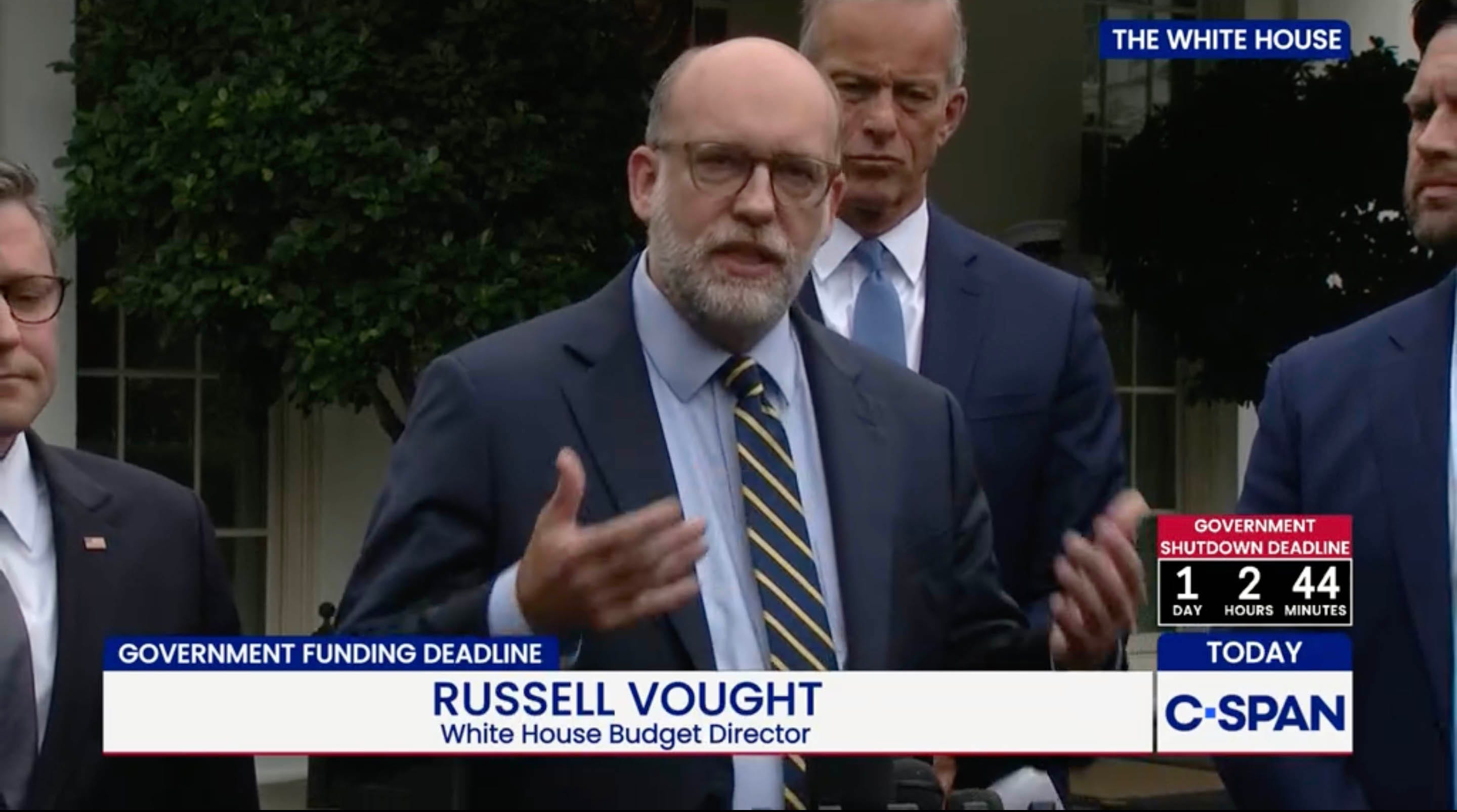
Office of Management and Budget Director Russell Vought at a Sept. 29 news conference. (C-SPAN)

By Sheldon Whitehouse

In ordinary times, Americans go about their daily lives without much worry about who is running the Office of Management and Budget (OMB), a powerful, low-profile agency tasked with executing the federal budget.

These are not ordinary times.

President Donald Trump’s OMB director is Russell Vought. You might have seen Vought in one of Trump’s crazed AI videos, portrayed as the government’s grim reaper, gleefully wielding a scythe in the Trump shutdown. Sen. Mike Lee (R-Utah) said of Vought’s plans to use the shutdown to fire more federal workers, this is what Vought has been “dreaming about—and meticulously preparing for—[…] since puberty.” Not a normal guy.

On Friday, Vought began implementing his plan to fire those furloughed federal workers, beginning with about 4,100 people, including about 600 at the Centers for Disease Control and Prevention and 1,400 at Treasury.

Vought is an extremist; a tool of creepy billionaires in the corporate takeover of the U.S. government; and he seems to get unhealthy pleasure from depriving Americans of the government services their tax dollars are supposed to fund.

Let’s start with a little history on Vought’s lawlessness. Vought served at OMB during the first Trump administration. Back then, he violated the Impoundment Control Act—the law requiring the executive branch to spend the funds Congress appropriates—by withholding (“impounding”) hundreds of millions of dollars in aid from the heroic Ukrainian soldiers fighting back against Russia’s “little green men” invasion. That “dirt-for-dollars” scandal was at the center of Trump’s first impeachment.

Now in Trump’s second term, Vought wields OMB as a hammer to break the power of Congress and create executive supremacy. Before Vought’s confirmation this year, he said, “If I am confirmed as OMB Director, I will follow the advice of OMB General Counsel, and ultimately the President” on the Impoundment Control Act. He did not say he would follow the law established by Congress. He did not say he would follow court decisions. Just his legal counsel and his lawbreaking president.

So, let’s look at who Vought’s legal counsel is. Remember when billionaire Harlan Crow commissioned a now-infamous painting? That painting is basically a panorama of the Supreme Court’s corruption: the billionaire who funded it (Crow), the justice who secretly accepted hundreds of thousands of dollars in billionaire gifts (Justice Clarence Thomas), the guy who implemented the scheme and travels with justices on billionaire-funded trips (Leonard Leo), and a sidekick who defends the justices from any criticism of their “Billionaire Gifts Program.” The sidekick in the billionaire court-capture panorama is Mark Paoletta, now Vought’s legal counsel. Paoletta has said the Impoundment Control Act is a stupid law, and tweeted at Vought: “Impound, baby, impound.”

Like Paoletta, Vought is a creature of the far-right, billionaire dark-money operation that captured the Supreme Court. Before he went to OMB the first time, he was vice president at Heritage Action, a billionaire-funded dark-money group advocating for things that dark-money billionaires want. He’s mostly still working for them, just at taxpayer expense now.

After Trump lost in 2020, Vought set up an outfit called the Center for Renewing America—another billionaire-funded, dark-money front advocating for things dark-money billionaires want. “Senior fellows” at his center included Paoletta and Kash Patel, the guy now busy turning the FBI into a political weapon for Trump.

At the Center for Renewing America, Vought was a key author of Project 2025, the dark-money-funded playbook to loot the American government for billionaires and big polluters. Yes, the one Trump pretended not to know about. Now Vought is at OMB implementing that plan. In the Trump regime, you see Project 2025 playing out again and again. Take, for one example, the administration’s dirty work to kneecap clean energy for the big fossil fuel companies that prop up Republican campaigns and gave Trump hundreds of millions. Look at how Vought decapitated the Consumer Financial Protection Bureau, the agency that had returned over $21 billion to Americans cheated by giant companies, created by Congress specifically to protect consumers after the 2008 financial crisis.

Vought’s Project 2025 scheme is to destroy all independent government agencies. Agencies like the Federal Reserve, the Securities and Exchange Commission, and the Federal Energy Regulatory Commission require independence from direct executive branch political control to serve the public. These agencies shield Americans from corporate exploitation, protect consumers and ensure a functioning economy. Vought has said, “What we’re trying to do is identify the pockets of independence and seize them.” Seizing the independent agencies of government lets him put them under the political control of the big corporate donors who paid to put the regime in power and makes Trump the gatekeeper of political control.

Billionaire stoogery aside, Vought is a bit strange. He said about the men and women who work in the federal government: “We want them to be traumatically affected. When they wake up in the morning, we want them to not want to go to work because they are increasingly viewed as the villains.” Your postman, a villain; the meat inspector who makes your steak safe at the USDA, a villain; the scientists who do brain cancer research, villains—according to Vought. Not normal.

Vought wants to replace government experts with toadies who can’t or won’t stand up to big corporations and polluters. He has begun mass firings of the civil servants who keep this country running—and threatened worse. Now, he’s saying that federal workers furloughed through no fault of their own aren’t guaranteed back pay after the government shutdown, despite a law that clearly says they are. Intimidation of the federal workforce, to make it compliant to political pressure from big corporate powers, is his goal. To actuate that political pressure, the big corporate powers will have to go to Trump, and Trump can then demand corrupt tribute for himself and his family. It’s a racket in the making.

Like a clever commissar for a dictator, or the plotting vizier of a sultan, Vought is a dangerous figure. This is not a guy who respects the law and the Constitution. This guy is the tool of a very small, very creepy, right-wing billionaire elite. Vought belongs to the looters and polluters, and he is manipulating our government for their benefit, setting us up for ever worse corruption.

Sheldon Whitehouse, a Democrat, represents Rhode Island in the U.S. Senate.


The Contrarian is reader-supported. To receive new posts, enable our work, help with litigation efforts, and keep this opposition movement alive and engaged, please consider joining the fight by becoming a paid subscriber.

Subscribe

UK investment platform warns traders to avoid bitcoin, crypto

UK investment platform warns traders to avoid bitcoin, crypto

CHONGQING, CHINA - JULY 17: In this photo illustration, a person holds a physical representation of a Bitcoin (BTC) coin in front of a screen displaying a candlestick chart of Bitcoin’s latest price movements on July 17, 2025 in Chongqing, China. (Photo illustration by Cheng Xin/Getty Images)
Cheng Xin | Getty Images News | Getty Images


A major trading platform in the U.K. has issued a stark warning to investors hoping to cash in on relaxed crypto rules: cryptocurrencies should not be in your portfolio.

A longstanding U.K. ban on retail investors being able to access crypto exchange-traded notes (ETNs) was lifted on Oct. 8. Exchange-traded notes are debt instruments linked to one or more specified assets. In this case, they give traders exposure to digital tokens through the use of a regulated exchange.


The new rules sparked a warning from Hargreaves Lansdowne — the U.K.’s biggest retail investment platform — which urged British retail investors to be cautious.

“The HL Investment view is that bitcoin is not an asset class, and we do not think cryptocurrency has characteristics that mean it should be included in portfolios for growth or income and shouldn’t be relied upon to help clients meet their financial goals,” Hargreaves Lansdowne said in a statement.

“Performance assumptions are not possible to analyse for crypto, and unlike other alternative asset classes it has no intrinsic value.”

When U.K. officials announced earlier this year that the ETN ban would be overturned, they argued the move would support “the growth and competitiveness of the U.K.’s crypto industry.” It was hailed by crypto firms as a major breakthrough for the sector in Britain.

The government also ruled on Wednesday that investors will be able to hold crypto ETNs in stocks and shares ISA accounts, an account where up to £20,000 ($26,753) a year can be invested tax-free.

Big gains, and big losses


Cryptocurrencies, which are decentralized and therefore not regulated by central authorities like governments, have their critics and prices are notoriously volatile. In 2022, a so-called “crypto wintersaw investors lose $2 trillion. Bitcoin — the most commonly traded cryptocurrency — has led to major returns for early investors, however, and was last seen trading around $121,508.

The Hitler Youth

 The Hitler Youth (German: Hitlerjugend[ˈhɪtlɐˌjuːɡn̩t], often abbreviated as HJ,[haːˈjɔt]) was the youth wing of the German Nazi Party. Its origins date back to 1922 and it received the nameHitler-Jugend, Bund deutscher Arbeiterjugend("Hitler Youth, League of German Worker Youth") in July 1926. From 1936 until 1945, it was the sole official boys' youth organisation in Germany (although the League of German Girls was a wing of it) and it was partially a paramilitary organisation. It was composed of the Hitler Youth proper for male youths aged 14 to 18, and the German Youngsters in the Hitler Youth (Deutsches Jungvolk in der Hitler Jugendor "DJ", also "DJV") for younger boys aged 10 to 13.

With the surrender of Nazi Germany in 1945, the organisation de facto ceased to exist. On 10 October 1945, the Hitler Youth and its subordinate units were outlawed by the Allied Control Council along with other Nazi Party organisations. Under Section 86 of the Criminal Code of the Federal Republic of Germany, the Hitler Youth is an "unconstitutional organisation" and the distribution or public use of its symbols, except for educational or research purposes, is illegal.