Sign up today

Sign up today
Softphone APP for Android &IOS

RG Richardson Communications News

I am a business economist with interests in international trade worldwide through politics, money, banking and VOIP Communications. The author of RG Richardson City Guides has over 300 guides, including restaurants and finance.

Bishop’s University Welcomes Charles Milliard as Executive in Residence - Bishop's University

Bishop’s University Welcomes Charles Milliard as Executive in Residence - Bishop's University

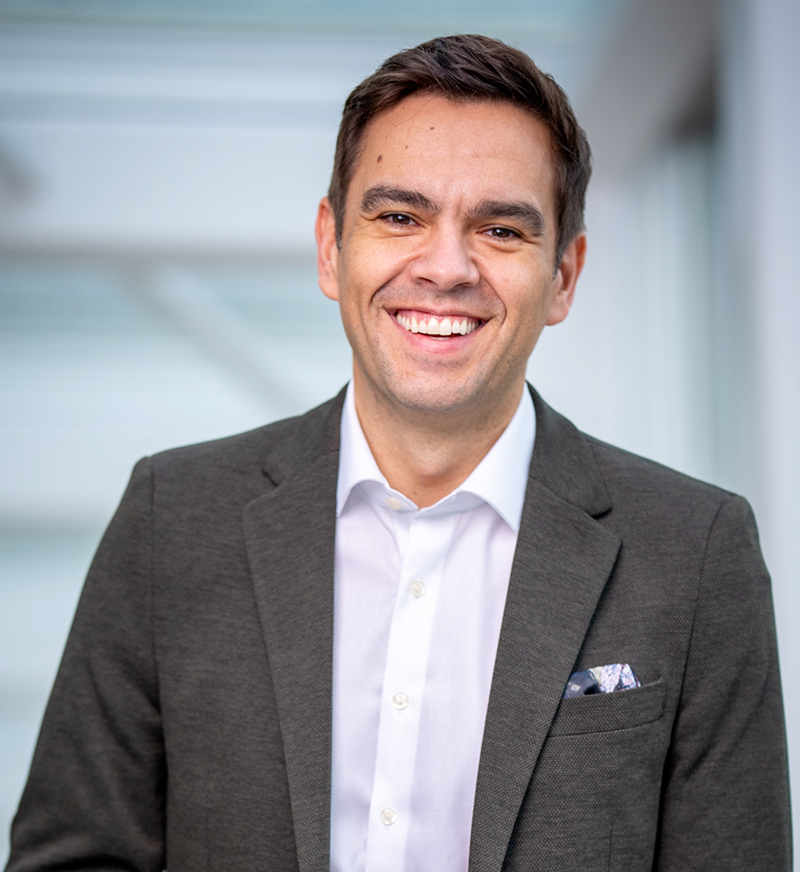
Charles Milliard

Bishop’s University Welcomes Charles Milliard as Executive in Residence

Bishop’s University is pleased to announce the appointment of Charles Milliard as Executive in Residence at the Williams School of Business (WSB) for the Fall 2025 term. Developed following a recommendation from the Dean of the Williams School of Business, Dr. Margaret Shepherd, this appointment marks a new and innovative way for Bishop’s to connect students and faculty with leaders from the business world, bridging scholarship and practice in meaningful ways.

Mr. Milliard is a seasoned executive recognized for his ability to mobilize organizations and stakeholders in diverse fields, including health, economics, and public policy. Notably, he served as president of the Fédération des Chambres de commerce du Québec (FCCQ). As Executive in Residence, he will engage with students, faculty, and the wider community through guest lectures, mentorship, and participation in special events, providing contemporary leadership perspectives on strategy, innovation, and responsible growth.

“I am immensely proud to be joining the team at Bishop’s University’s Williams School of Business,” said Mr. Milliard. “Bishop’s is a small gem of a university, truly one of a kind in Quebec and Canada. I am genuinely delighted to be able to contribute, in my own way, to its profile, and to have the opportunity to teach the next generation of business leaders. My career so far has brought me into contact with inspiring people in the fields of health, economics, and politics, and I am honoured to now be able to spend time with students in the region where I live. Together, we will discuss the importance of our entrepreneurial fabric as a driver of our collective prosperity, and our shared ambitions for the Quebec of tomorrow.”

Dr. Shepherd said, “Having experienced leaders like Charles share their expertise enriches our students’ learning and strengthens our ties to Quebec’s business ecosystem. His appointment reflects our commitment, outlined in Bishop’s 2025-2029 Strategic Plan, to cultivate tomorrow’s innovators and leaders through real-world engagement. By welcoming him into our academic community, we are creating more opportunities for dialogue, mentorship, and collaboration that will benefit both our students and our society.”

The Executive in Residence appointment is honorary and reflects the University’s appreciation for the expertise and perspective Mr. Milliard brings to the School. His presence on campus will contribute to Bishop’s ongoing efforts to strengthen what makes the University distinct, while fostering innovation and community connection.

About Bishop’s University 

Founded in 1843 and located on the traditional territory of the Abenaki people (W8banakiak wdakiw8k), Bishop’s University is a unique English-language, primarily undergraduate institution located in the historic and picturesque Eastern Townships region of Québec. Our 550-acre campus offers an immersive educational experience within a close-knit community.  

With a student population of approximately 2,600 full-time students, Bishop’s fosters deep academic engagement through personalized course of study, small class sizes and meaningful interaction between students and professors. We offer over 100 programs across five faculties: Arts, Humanities, Social Sciences, Natural Sciences and Mathematics, Business, and Education.  

For more than 180 years, Bishop’s has cultivated leaders and changemakers through interdisciplinary learning, experiential opportunities, and extensive student support. Whether studying abroad, conducting research, participating in an athletic team, or learning by doing, Bishop’s students are empowered to pursue academic excellence and personal growth in an inclusive and dynamic

Advocate for women receives honours - Irene Y. McNeill

 Advocate for women receives honours

Irene Y. McNeill, who’s an avid sailor and advocate for women in the sport, is one of 80 Order of Canada appointees. The Order of Canada is how the country honors people who make extraordinary contributions to Canada.

McNeill has not only helped develop the sport of sailing throughout the country and around the world, but has actively increased the number of women participating in the sport. One way she has accomplished this was by co-founding the LEAP program, which encourages girls to take up sailing.

In addition to participating in the sport, McNeill has been particularly instrumental in the leadership side of sailing and the advancement of women in race management. She has supported many initiatives to encourage women to participate in race management and improve skills development.

In 2012, McNeill was the first Canadian woman to earn the title of international race officer by World Sailing. – Full report

Meidas Humiliates Donald… Shrinkage Goes Global

Meidas Humiliates Donald… Shrinkage Goes Global

BEN MEISELAS AND MEIDASTOUCH NETWORK


JAN 23


READ IN APP

Written by Ben Meiselas

I told you it would get embarrassing, Donald.

You didn’t listen.

And now the entire world is laughing at you.

Your humiliating trip to Davos was supposed to be your big “statesman” moment at the World Economic Forum. Instead, it turned into a global intervention. World leaders openly mocked you. Business leaders rolled their eyes. Allies distanced themselves. Even authoritarians barely pretended to take you seriously.
Upgrade to paid

Trump has never looked smaller.
Never weaker.
Never more exposed.

You flew halfway around the world just to get humiliated in public.

And then came the desperation.

You announced your so-called “Board of Peace,” a group so unserious it became an instant punchline. No democracies. No NATO allies. Just you, Vladimir Putin, Alexander Lukashenko, and whatever other strongmen still return your calls.

Then, in a moment that will live in infamy, last night you claimed you had “disinvited” Mark Carney to this laughable board.

Mark Carney never wanted to be on it.
No serious leader wants to be on it.
What an embarrassment!

That’s the thing now, Donald. You can’t even bluff anymore. The world immediately sees through it. You announce things that don’t exist. You invent authority you don’t have. You pretend people respect you when they very publicly do not.

And while you were being laughed out of Davos, something else was happening.

We kept building.

As you know, the MeidasTouch Network is expanding globally. We’ve built Meidas Canada. There will be more international announcements in the future. We’re working with pro-democracy voices across borders. We’re building out our new DC bureau. We’ve made partnerships to get cameras on the ground in Minneapolis. While you shrink, we grow. While you isolate America, we help connect democratic movements around the world.

You backed down on Greenland because the world stood up to you.
You threatened invasion.
You blustered.
You folded.

That’s the pattern now. Loud threats, followed by humiliating retreat.

And we see what comes next.

You’re coming for independent journalists. You’re trying to sic the DOJ on us all. You want obedience. You want silence. You want state media.

And here’s the funniest part: you’re failing at that too.

MeidasTouch was the first to catch you using AI to manipulate an image of a civil rights leader your goons arrested in Minneapolis. You thought you’d get away with that, didn’t you, Donald?

Independent media is stronger than ever. People don’t trust corporate gatekeepers anymore, and they certainly don’t trust you. Every threat you make just exposes your fear. Every tantrum confirms your weakness.

Sorry, but we’re not Fox. We’re not CBS.

You’re not intimidating anyone.
You’re embarrassing yourself.

Enjoy your “peace board,” Donald. Enjoy your imaginary authority with your new “friends.” Enjoy sitting with Putin and Lukashenko while democratic nations close ranks against you.

Everyone sees you now.

They see how weak you are.
How small you are.
How utterly pathetic this all is.

And we’re not going anywhere.

The MeidasTouch Network doesn’t answer to billionaires. We don’t submit. We don’t obey. We don’t flinch.

We are building—brick by brick—across borders, across platforms, across communities that believe in democracy and truth.

Your threats don’t work on us.
Your bullying doesn’t work on us.
Your intimidation doesn’t work on us.

The corporate media may still tiptoe around you. We won’t.

As you continue to spiral on the world stage, we’ll be doing what you fear most: reporting the truth, exposing the lies, and reminding people—every single day—that you are not strong.

You’re desperate.

And everyone can see it.

Thanks, MeidasMighty.

Let’s keep building. If you are able, now is the time to become a paid subscriber if you haven’t yet.

NCAA players charged for allegedly rigging games


Kennesaw State Owls player Simeon Cottle shoots a basketball over Indiana Hoosiers player Anthony Leal.

Justin Casterline/Getty Images

New year, new sports gambling scandal: Federal prosecutors revealed yesterday that they’re accusing a ring of college basketball players, alumni, professional gamblers, and one former NBA player of meddling in more than two dozen games, which netted them millions of dollars in sportsbook winnings.

According to the indictment:

  • It all started in September 2022, when gamblers paid a former Chicago Bulls shooting guard playing overseas in the Chinese Basketball Association to make fewer baskets in order to fix final game score margins in favor of their bets, in a ploy known as point shaving.
  • The group then recruited mostly smaller-time US college ballers, who were unlikely to earn significant NIL money, with bribes ranging from $10,000 to $30,000 per game.
  • All together, 39 NCAA players across more than 17 Division I teams became involved with the gambling ring, which fixed or tried to fix more than 29 games in recent years.

This type of allegation is “not entirely new information to the NCAA,” and investigations into almost all named teams, which include Alabama State and Tulane, are already underway or completed, the NCAA’s president said in response to the news.

Airball: One NCAA defendant allegedly texted the bagman during a fixed game to assure him that co-conspiring players would keep the ball away from a teammate who was playing too well.

Zoom out: Game-fixing fiascos recently hit the NBA and MLB, too. To protect college sports, the NCAA is lobbying to ban prop bets on collegiate matchups.

Secure meetings from the team behind Proton Mail


Secure meetings from the team behind Proton Mail


Whether you're discussing a project, closing an important business deal, or just catching up with friends and family, your conversations stay private. No third parties — advertisers, hackers, snooping governments, or even us — can access your calls.


How to start using Proton Meet


Proton Meet is available exclusively to Proton community members with Lifetime, Visionary and Enterprise plans during early access. If you are a large organization and would like to get early access to Meet, you can contact our sales team or your account manager.
Contact us

Want to be notified when Proton Meet is available to everyone?


If you already have a Proton Account, we'll email you as soon as Meet is available for general launch.

If you're not a Proton user yet, you can create a free account and enjoy Proton Mail, VPN, Pass, Drive, and more encrypted services while you wait for Meet.
Create a free account


Over 100 million people and businesses trust Proton to protect their data.

Now you can protect your video calls, too.

Rams owner Stan Kroenke now the largest private landowner in the U.S.

Rams owner Stan Kroenke now the largest private landowner in the U.S.


America’s biggest private landowner
Published Thu, Jan 15 20268:30 AM EST

Hayley Cuccinello@in/hayleycuccinello/@HCuccinello
ShareShare Article via FacebookShare Article via TwitterShare Article via LinkedInShare Article via Email
Key Points
Los Angeles Rams owner Stan Kroenke is now America’s largest private landowner after buying nearly 1 million acres of New Mexico ranchland in December, according to The Land Report.
Other boldface names like Bill Gates, Jeff Bezos and Ted Turner also made the annual rankings of private landowners.
Billionaire entrepreneurs are gaining ground as farmland investing becomes increasingly popular and more heirs choose to sell legacy properties.


Stan Kroenke of the Los Angeles Rams on the sideline during a game against the Philadelphia Eagles at SoFi Stadium Inglewood, California, Oct. 8, 2023.
Ric Tapia | Getty Images Sport | Getty Images


A version of this article first appeared in CNBC’s Inside Wealth newsletter with Robert Frank, a weekly guide to the high-net-worth investor and consumer. Sign up to receive future editions, straight to your inbox.

Stanley Kroenke owns the world’s most valuable sports empire, including the NFL’s Los Angeles Rams. Now the sports tycoon is also America’s largest private landowner, according to the newly released Land Report.


At 2.7 million acres, Kroenke’s holdings are larger than Yellowstone National Park — or the equivalent of roughly 2 million football fields.

Kroenke bought nearly 1 million acres of New Mexico ranchland in December from the family behind industrial conglomerate Teledyne, per The Land Report. According to the trade publication, the Singleton Ranches transaction is the largest land purchase in the U.S. in more than a decade. Late Teledyne founder Henry Singleton started his namesake ranch in the 1980s, and it’s grown into one of the nation’s largest cattle- and horse-breeding operations.

The acquisition vaulted Kroenke from fourth to first on The Land Report’s annual ranking of the country’s 100 largest private landowners, leapfrogging the Emmerson lumber family as well as billionaire media moguls John Malone and Ted Turner.


Most of the top 100 landowners aren’t boldface names like Kroenke. The Emmerson family, which ranks second, owns an estimated 2.44 million acres through their forest-products company Sierra Pacific Industries. The Singleton family, which sold the New Mexico ranches to Kroenke, still made the cut at 98th place with 171,000 acres.

However, investing in U.S. farmland has become popular among the ultra wealthy as a hedge against inflation and stock market volatility. From 2019 to 2024, farmland values have grown at an average annual rate of 5.8%, or 2% after inflation, according to the U.S. Department of Agriculture.


Billionaire entrepreneurs from Bill Gates to Philip Anschutz are increasingly buying up swaths of land for farming, ranching and forestry. Gates ranks 44th overall on The Land Report list with 275,000 acres but is still the largest private owner of U.S. farmland, specifically. Owned through his investment group, Cascade Investment, Gates’ farmland grows soybeans, corn, cotton, rice and even potatoes used for McDonald’s french fries.

Online brokerage billionaire Thomas Peterffy and Amazon founder Jeff Bezos also made the cut, with 647,000 acres and 462,000 acres, respectively.

Kroenke has been able to grow his land holdings relatively quickly by acquiring massive ranches that have been held in families for decades or even generations. He bought one of his largest ranches, Waggoner Ranch in north Texas, for $725 million in 2016, ending 160 years of family ownership. While these one-of-a-kind ranches are in short supply, more are hitting the market as heirs decide to sell rather than carry on the family business.

Danish pension fund to sell $100 million in U.S. Treasurys

Danish pension fund to sell $100 million in U.S. Treasurys
Protesters with Danish and Greenlandic flags during a demonstration in Copenhagen, Denmark, on Saturday, Jan. 17, 2026. Thousands of people took to the streets across Denmark to protest US President Donald Trump's ambitions to take control of Greenland, underscoring the deep unease over the future of the Arctic island. Photographer: Nichlas Pollier/Bloomberg via Getty Images
Protesters with Danish and Greenlandic flags attend a demonstration in Copenhagen, Denmark, Jan. 17, 2026.
Nichlas Pollier | Bloomberg | Getty Images

Danish pension operator AkademikerPension said it is exiting U.S. Treasurys because of finance concerns as Denmark spars with President Donald Trump over his threats to take over Greenland.

Anders Schelde, AkademikerPension’s investing chief, said the decision was driven by what it sees as “poor [U.S.] government finances” amid America’s debt crisis. But it also comes as tensions escalate between the U.S. and Denmark after Trump’s latest threats to tariff European countries if Greenland, an arctic territory of Denmark, isn’t sold to the U.S.

“It is not directly related to the ongoing rift between the [U.S.] and Europe, but of course that didn’t make it more difficult to take the decision,” Schelde said in a statement to CNBC.

The fund currently has a position of around $100 million in U.S. Treasurys, an AkademikerPension spokesperson confirmed to CNBC. The academics-focused fund plans to have exited that holding by the end of the month.

Schelde chiefly cited the ballooning debt bill facing the U.S. after decades of government overspending. The U.S. recorded a budget shortfall of $1.78 trillion last year, down just over 2% from 2024′s fiscal year as Trump’s broad and steep tariffs took effect.

Moody’s Ratings cut the United States’ sovereign credit rating down to Aa1 from Aaa in May, citing the budget deficit and high borrowing costs associated with rolling over debt at lofty interest rates.

The U.S.′ finances made “us think that we need to make an effort to find an alternative way of conducting our liquidity and risk management,” Schelde said. “Now we have found such a way and we [are] executing on that.”

Denmark has grown increasingly hostile toward the U.S. as Trump has ratcheted up his calls for control of Greenland to be given to the U.S. Trump said over the weekend that he would institute tariffs on several European nations beginning Feb. 1 if the U.S. did not take control of Greenland and that those levies could rise to 25% on June 1.

European leaders have reportedly considered using counter-tariffs and other punitive economic measures as a result. Some investors have worried that European countries could dump their U.S. asset holdings in response to Trump’s new tariffs.

Greenland Prime Minister Jens-Frederik Nielsen said Monday that it would “not be pressured” and “stand firm on dialogue, on respect and on international law.”

Treasury yields in the U.S. and abroad surged Tuesday, a sign of investors feeling geopolitical turmoil rising. The U.S. dollar and stocks fell, and gold rose to new all-time highs in a session defined by the “sell America” trade.

Bridgewater Associates founder Ray Dalio told CNBC on Tuesday that sovereign funds could start to dump U.S. investments if they stop seeing the U.S. as a stable trading partner.

“On the other side of trade, deficits, and trade wars, there are capital and capital wars,” Dalio told CNBC’s “Squawk Box” at the World Economic Forum in Davos, Switzerland. “If you take the conflicts, you can’t ignore the possibility of the capital wars. In other words, maybe there’s not the same inclination to buy ... U.S. debt and so on.”

Reuters first reported the Danish pension fund’s Treasury exit.

Thomas Coville claims Jules Verne Trophy


Thomas Coville claims Jules Verne Trophy


Scuttlebutt Sailing News: Providing sailing news for sailors · 38 minutes ago
by Editor · Feature


French skipper Thomas Coville has claimed the Jules Verne Trophy by improving the previous mark by more than 12 hours when his team crossed the finish line at 07:46:55 (French time) on January 25.

The Jules Verne Trophy is for the fastest time around the world by any type of yacht with no restrictions on the size of the crew, starting and finishing from the exact line between the Le Créac’h Lighthouse off the tip of Brittany (FRA) and the Lizard Point in Cornwall (GBR).

Coville and teammates Benjamin Schwartz, Frédéric Denis, Pierre Leboucher, Léonard Legrand, Guillaume Pirouelle, and Nicolas Troussel finished after 40 days, 10 hours, 45 minutes and 50 seconds at sea on their 105-foot Sodebo Ultim 3.

The previous record was 40 days, 23 hours, 30 minutes, 30 seconds, set in 2017 by another Frenchman, Francis Joyon on the 103-foot trimaran IDEC Sport. Coville and his crew got underway on December 15 and had to finish before 20:31 on January 25 to win

Coville and his crew faced dramatic weather conditions on their way to the record, having to lengthen their route in the South Atlantic before they withstood Storm Ingrid near the finish. They set new benchmark times at every Cape — Good Hope, Leeuwin, and Horn.

Coville averaged 29.17 knots over 28,315 miles, also improving two intermediate records during the journey. In comparison, Joyon sailed 26,412 miles at an average speed of 26.85 knots.

All ten winners of the Jules Verne Trophy have been either catamarans or trimarans.

Tracker: https://sodebo-ultim3.sodebo.com/

Record Facts
• Start and finish: a line between Créac’h lighthouse (Isle of Ushant) and Lizard Point (England)
• Course: non-stop around-the-world tour racing without outside assistance via the three Capes (Good Hope, Leeuwin and Horn)
• Minimum distance: 21,600 nautical miles (40,000 kilometres)
• Ratification: World Sailing Speed Record Council

Here are the nine that have held the trophy:
2026 – Thomas Coville / Sodebo Ultim 3 (32m) – 40:10:45:50
2017 – Francis Joyon / IDEC SPORT (31.5m) – 40:23:30:30
2012 – Loïck Peyron / Banque Populaire V (40m) – 45:13:42:53
2010 – Franck Cammas / Groupama 3 (31.5m) – 48:07:44:52
2005 – Bruno Peyron / Orange II (36.8m) – 50:16:20:04
2004 – Olivier De Kersauson / Geronimo (33.8m) – 63:13:59:46
2002 – Bruno Peyron / Orange (32.8m) – 64:08:37:24
1997 – Olivier De Kersauson / Sport-Elec (27.3m) – 71:14:22:08
1994 – Peter Blake, Robin Knox-Johnston / Enza New Zealand (28m) – 74:22:17:22
1993 – Bruno Peyron / Commodore Explorer (28m) – 79:06:15:56

Remote work disparity: Men return to office, women stay home

Remote work disparity: Men return to office, women stay home

A return to office for men only?by Gleb Tsipursky, opinion contributor - 01/13/26 9:00 AM ET


Getty Images


A silent reshuffle is unfolding across corporate America. Office towers are refilling with men, while women continue tapping at keyboards from their kitchen tables. Far from a balanced rebound, the return-to-office push has become unmistakably gendered.

Fresh data from the U.S. Bureau of Labor Statistics reveal a striking split: “the share of men who spent some time working at home decreased from 34 percent in 2023 to 29 percent in 2024, while the share of women who did so remained the same (36 percent).” The trend is clear — return to office is happening for men, not for women.


These figures sit atop an historic surge in women’s labor-force engagement. Brookings researchers note that prime-age female participation reached “77.7 percent, slightly below the highest level on record” in May 2025. Much of that momentum comes from mothers who can remain in the workforce precisely because remote options still exist.

Corporate policy explains only part of the divergence. Three structural forces amplify the effect.

One is optics. Managers still equate physical presence with ambition, and annual performance reviews still tend to reward the employee whose face is most often visible in the conference room. The message may sometimes be unspoken, but it’s unmistakable: the corner-office track still runs through the lobby turnstile.

Men, socialized to chase visible advancement, often respond to those cues by booking the earliest train and the latest return, ensuring their badges swipe first and last. Women, balancing caregiving or simply valuing autonomy, may weigh the same cues differently. Many have learned that a polished deliverable submitted at 6 a.m. from the breakfast table travels just as far as a handshake in the bullpen, and they refuse to sacrifice the flexibility that underpins that efficiency.

Moreover, male-dominated occupations in finance, tech infrastructure and heavy industry are facing louder calls to repopulate headquarters. Earnings calls routinely feature CEOs assuring investors that “culture and innovation happen in person,” language that filters down through layers of middle management as mandatory desk days. Women cluster more heavily in functions such as HR, marketing and design — roles that proved remote-friendly during the pandemic and remain so because collaboration happens in cloud-based suites rather than on whiteboards bolted to drywall. These divisions reinforce the gender split every time a new return-to-office memo hits inboxes.

Finally, social expectations. The domestic load still skews female despite modest progress since 2020. Remote work remains the most practical way to integrate school pick-ups, therapist appointments and elder-care errands into a salaried day. Employers tacitly recognize that reality by tolerating women’s flexibility while nudging men to reclaim cubicles. The result is a quiet re-segregation of labor: women secure autonomy at the cost of in-office visibility, while men win face time but surrender work-life balance — an imbalance that now shapes careers, household dynamics and ultimately the leadership pipeline itself.


Retention data in the work-from-home literature link hybrid options to higher job satisfaction and lower turnover; if women keep that benefit while men lose it, companies risk re-segregating career paths along flexibility lines. Career-progression research warns that remote workers, many of them women, already face proximity bias in the form of reduced visibility, fewer promotions and limited mentorship. A scenario in which men gain office face time and women do not could deepen those promotion gaps.

Conversely, male re-entry may backfire for firms hunting scarce talent. The Brookings analysis shows female participation now exceeds its pre-pandemic peaks, suggesting flexible roles attract a crucial share of the workforce. Requiring men to sacrifice that flexibility may push some to greener, hybrid pastures, compounding turnover.

Finally, when male remote days drop, the domestic rebalancing achieved since 2020 may erode, pulling women back into disproportionate housework — an outcome squarely at odds with corporate inclusivity pledges.


The evidence is unmistakable. Remote work in 2025 remains standard for more than a third of working women, as it was last year, yet it is rapidly slipping for men. Promotion politics, industry composition and entrenched social norms have funneled the genders down separate post-pandemic paths.


Employers crowing about successful return-to-office mandates should look closer: they have engineered a return-to-office for men only, reshaping talent pipelines and, potentially, future leadership ranks. Until advancement metrics truly reward results over chair time and genuine hybrid options extend to all employees, this new, subtler form of workplace inequality will persist.

Redefining commitment — that is, valuing output wherever the laptop sits — is no longer an HR talking point. It is the front line of gender equity in the post-COVID labor market, and the stakes rise each time another man swipes a building badge while his female colleague logs into the morning stand-up from home.

Venezuela Grab: Who’ll Stand Up for International Law?

 Venezuela Grab: Who’ll Stand Up for International Law? | The Tyee


Venezuela Grab: Who’ll Stand Up for International Law?
Carney muffs a chance while Poilievre celebrates Trump’s dangerous new rules.

Michael Harris 5 Jan 2026The Tyee

Michael Harris, a Tyee contributing editor, is a highly awarded journalist and documentary maker.Our journalism is supported by readers like you. Click here to support The Tyee.


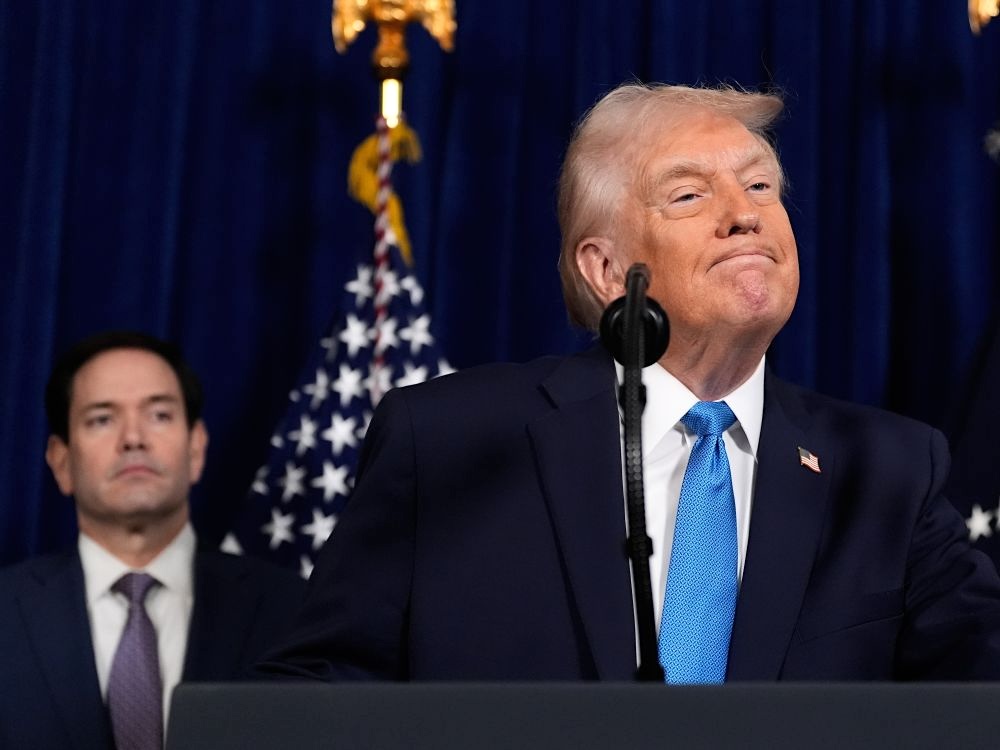
US President Donald Trump boasts about his Venezuela attack as Secretary of State Marco Rubio watches on Jan. 3. Photo by Alex Brandon, the Associated Press.


Listen to this article
8 min


So, the president who falls asleep in cabinet meetings has now invaded a sovereign nation and abducted its leader and his wife to face “justice” in the United States.

Announcements, Events & more from Tyee and select partners
Leanne Betasamosake Simpson Comes to the Chan Centre

The award-winning author will discuss her bestselling book ‘Theory of Water’ on Jan. 29.

That makes it official. America has its first rogue president, Donald J. Trump. As a result, the United States and the rest of the globe are suddenly in a precarious place. The rule of law is at risk of being replaced by an old and ugly idea: might is right.

In that throwback world, the fates of the United States’ closer neighbours would be far more at risk — Canada, right next door, included. As Trump has noted in his musings about harming our economy until we are ripe for annexation, we are a nation with resources the United States covets and a far smaller population and military.

And yet Prime Minister Mark Carney’s first statement about the violent Maduro extraction mentioned nothing about its patent illegality.


It fell to his foreign minister, Anita Anand, to vaguely post on social media: “In keeping with our long-standing commitment to upholding the rule of law and democracy, Canada calls on all parties to respect international law.”

The Tyee is supported by readers like you Join us and grow independent media in Canada


At least NDP interim leader Don Davies was full-throated in his condemnation of the “totally illegal” U.S. operation.

But Conservative Leader Pierre Poilievre has joined with others cheering Trump on. Why? Spin and optics.

The leader who was deposed by U.S. military force is no doubt a vile dictator, credibly accused of everything from dealing drugs to murder to stealing Venezuela’s 2024 election. Hence, getting rid of Nicolás Maduro in this way was not only justified but downright admirable, right?

Absolutely not.


Billionaires Don’t Control Us


Get The Tyee’s free daily newsletter in your inbox.

Journalism for readers, not profits.

EmailSubscribe

This is not the first time Trump has appealed to the authoritarian logic that some people are so bad that they deserve whatever they get — including summary execution. No due process required.

Case in point. When the U.S. military began blowing up alleged drug boats in the Caribbean, Trump justified the killings by accusing their crews of being “narco-terrorists.” Bad guys bringing cocaine and fentanyl into the United States to kill Americans. The president called those drugs “weapons of mass destruction,” the same, bogus rallying cry that led the United States into its calamitous invasion of Iraq.

As of Dec. 25, 115 people on those boats have been killed by U.S. forces, including two who survived the initial attack and were murdered waving for help as they clung to wreckage.

The Trump administration has produced no credible evidence that they know who or what was on these doomed vessels or where they were headed.

Nor has Trump provided any legal justification for his lethal action.

Accordingly, that action has been widely denounced as illegal — not self-defence, as Trump claims. More like murder on the high seas.

And that is one of the reasons that no one should be patting Donald Trump on the back after his attack on Venezuela.

Instead, they should be taking note of the fact that Trump is fighting lawlessness with lawlessness of his own — based on a clear violation of his oath of office, in which he pledged as president to uphold the U.S. Constitution.


Towards ‘a world of violence, chaos and instability’

As the New York Times put it, by bombing Venezuela and abducting its leader and his wife, Trump is “pushing our country toward an international crisis without valid reasons. If Mr. Trump wants to argue otherwise, the Constitution spells out what he must do: Go to Congress. Without congressional approval, his actions violate U.S. law.”

Trump never sought such approval, suggesting that Congress might “leak” the details of the Venezuelan mission.

And it’s not only the highest U.S. law that Trump is breaking. The secretary-general of the United Nations, António Guterres, has described Trump’s attack on Venezuela as a “dangerous precedent.”

A statement from the UN said that “the secretary general continues to emphasize the importance of full respect — by all — of international law, including the UN Charter.” That charter calls for respecting every country’s sovereignty.

Trump’s attack on Venezuela has been widely denounced by those world leaders who understand the harrowing new order it signals. From South America, the criticism is particularly vehement.


Trump’s Coup Plans for Venezuela Are Bad News for Alberta’s Oilsandsread more

This is how Luiz Inácio Lula da Silva, president of Brazil, put it: “Attacking countries in flagrant violation of international law is the first step toward a world of violence, chaos and instability.”

Colombian President Gustavo Petro described the U.S. military action as an “assault on the sovereignty of Latin America.”

Norway’s foreign minister, Espen Barth Eide, said, “The American intervention in Venezuela is not in accordance with international law.”

This throws into sharp contrast Canada’s more muted and weak-kneed response. Not only did Carney not criticize the U.S. attack on Venezuela, despite the obvious violation of international law and all that could mean. He welcomed the removal of Maduro as an opportunity for Venezuela to achieve democracy after decades of repressive dictatorship that began with Hugo Chávez.

Carney called for that march toward freedom to be led by Venezuelans. Sadly, that won’t be happening. In using military force to bring about regime change in Venezuela, Trump made a stunning announcement. The president said that the United States would “run” Venezuela for an unspecified time, because he didn’t want another Maduro in charge.

And not only would the United States rule the country for the time being, but Trump announced that U.S. oil companies would be returning to Venezuela to take charge of the country’s vast oil reserves, the largest in the world.

Grateful Dead founding member Bob Weir dies at 78

Grateful Dead founding member Bob Weir dies at 78


Grateful Dead founding member Bob Weir dies at 78
Published Sat, Jan 10 20269:40 PM EST

ShareShare Article via FacebookShare Article via TwitterShare Article via LinkedInShare Article via Email


American Rock musician Bob Weir plays guitar as he performs on stage, with the band Grateful Dead, at Cal Expo Amphitheatre, Sacramento, California, August 5, 1989.
Steve Eichner | Archive Photos | Getty Images


Bob Weir, the guitarist and singer who, as an essential member of the Grateful Dead, helped found the sound of the San Francisco counterculture of the 1960s and kept it alive through decades of endless tours and marathon jams, has died. He was 78.

Weir’s death was announced Saturday in a statement on his Instagram page.


“It is with profound sadness that we share the passing of Bobby Weir,” a statement on his Instagram account posted Saturday said. “He transitioned peacefully, surrounded by loved ones, after courageously beating cancer as only Bobby could. Unfortunately, he succumbed to underlying lung issues.”

Weir joined the Grateful Dead — originally the Warlocks — in 1965 in San Francisco at just 17 years old. He would spend the next 30 years playing on endless tours with the Grateful Dead alongside fellow singer and guitarist Jerry Garcia, who died in 1995.

Weir wrote or co-wrote and sang lead vocals on Dead classics including “Sugar Magnolia,” “One More Saturday Night” and “Mexicali Blues.”

After Garcia’s death, he would be the Dead’s most recognizable face. In the decades since, he kept playing with other projects that kept alive the band’s music and legendary fan base, including Dead & Company.

“For over sixty years, Bobby took to the road,” the Instagram statement said. “A guitarist, vocalist, storyteller, and founding member of the Grateful Dead. Bobby will forever be a guiding force whose unique artistry reshaped American music.”


Weir’s death leaves drummer Bill Kreutzmann as the only surviving original member. Founding bassist Phil Lesh died in 2024. The band’s other drummer, Mickey Hart, practically an original member since joining in 1967, is also alive at 82. The fifth founding member, Ron “Pigpen” McKernan, died in 1973.

Dead and Company played a series of concerts for the Grateful Dead’s 60th anniversary in July at Golden Gate Park in San Francisco, drawing some 60,000 fans a day for three days.

Born in San Francisco and raised in nearby Atherton, Weir was the Dead’s youngest member and looked like a fresh-faced high-schooler in its early years. He was generally less shaggy than the rest of the band, but he had a long beard like Garcia’s in later years.

The band would survive long past the hippie moment of its birth, with its ultra-devoted fans known as Deadheads often following them on the road in a virtually non-stop tour that persisted despite decades of music and culture shifting around them.

Honoree Bob Weir of Grateful Dead accepts the 2025 MusiCares Persons of the Year award onstage during the 2025 MusiCares Persons of the Year Honoring The Grateful Dead on January 31, 2025 in Los Angeles, California.
Kevin Mazur | Getty Images Entertainment | Getty Images


“Longevity was never a major concern of ours,” Weir said when the Dead got the Grammys’ MusiCares Person of the Year honor last year. “Spreading joy through the music was all we ever really had in mind, and we got plenty of that done.”

Ubiquitous bumper stickers and T-shirts showed the band’s skull logo, the dancing, colored bears that served as their other symbol, and signature phrases like “ain’t no time to hate” and “not all who wander are lost.”

The Dead won few actual Grammys during their career — they were always a little too esoteric — getting only a lifetime achievement award in 2007 and the best music film award in 2018.

Just as rare were hit pop singles. “Touch of Grey,” the 1987 song that brought a big surge in the aging band’s popularity, was their only Billboard Top 10 hit.

But in 2024, they set a record for all artists with their 59th album in Billboard’s Top 40. Forty-one of those came since 2012, thanks to the popularity of the series of archival albums compiled by David Lemieux.

Their music — called acid rock at its inception — would pull in blues, jazz, country, folk and psychedelia in long improvisational jams at their concerts.

“I venture to say they are the great American band,” TV personality and devoted Deadhead Andy Cohen said as host of the MusiCares event. “What a wonder they are.”

230m users ask ChatGPT about health


ChatGPT Health

Nick Iluzada

Who needs doctors when you can ask a robot if your nagging cough is just a cold or, far more likely, a rare 18th-century pulmonary disease? OpenAI says there are hundreds of millions of you doing the latter.

The AI company behind ChatGPT said that 230 million users ask the chatbot health questions every week. That’s about 29% of the app’s total user base (as of late last year). Health is such a popular topic on ChatGPT that OpenAI announced it’s launching a dedicated experience with “enhanced privacy” to store all of your health-related questions.

The new platform, ChatGPT Health, allows users to connect their medical records and wellness app info. OpenAI stresses that it’s meant “to support, not replace, medical care.” It added that ChatGPT Health is not intended to diagnose or treat illnesses. For that, you still need to be a human with a medical degree.

U.S. Exits UN Climate Bodies, 66 International Organizations

 BREAKING: U.S. Exits UN Climate Bodies, 66 International Organizations


U.S. Exits UN Climate Bodies, 66 International Organizations
January 7, 2026
Reading time: 9 minutes

Full Story: The Associated Press with files from The Energy Mix
Author: Matthew Lee, Farnoush Amiri, Tammy Webber


UNclimatechange/Flickr


The UN Framework Convention on Climate Change (UNFCCC) and the Intergovernmental Panel on Climate Change (IPCC) are among the 66 international organizations the United States is exiting under an executive order signed by Wednesday by Donald Trump.

The order suspends U.S. support for 66 organizations, agencies, and commissions, following the administration’s review of participation in and funding for all international organizations, including those affiliated with the United Nations. A White House memorandum said the withdrawal affects organizations and treaties that are “contrary to the interests of the United States.”

“Not exactly a smart move leaving rulemaking to others,” Andreas Sieber, associate director of policy and campaigns with 350.org, said on LinkedIn. “This will hurt the U.S. influence for decades.”

Many of the targets are UN-related agencies, commissions, and advisory panels that focus on climate, population, labour, migration and other issues the Trump administration has categorized as catering to diversity and “woke” initiatives, The Associated Press reports. Other non-UN organizations on the list include the Partnership for Atlantic Cooperation, the International Institute for Democracy and Electoral Assistance, and the Global Counterterrorism Forum.

“The Trump administration has found these institutions to be redundant in their scope, mismanaged, unnecessary, wasteful, poorly run, captured by the interests of actors advancing their own agendas contrary to our own, or a threat to our nation’s sovereignty, freedoms, and general prosperity,” Secretary of State Marco Rubio said in a statement.

Trump’s decision to withdraw from organizations that foster cooperation among nations to address global challenges follows Saturday’s military action against Venezuela and accelerating threats aimed at Greenland, Colombia, Cuba, Mexico, and Canada.
Forfeiting Climate Influence

The withdrawal from the UN Framework Convention on Climate Change (UNFCCC) is the latest effort by Trump and his allies to distance the U.S. from international organizations focused on climate and addressing climate change.

The UNFCCC, the 1992 agreement between 198 countries to financially support climate change activities in developing countries, is the underlying treaty for the landmark Paris climate agreement. Trump—who calls climate change a hoax—withdrew from that agreement soon after reclaiming the White House.

Gina McCarthy, former White House National Climate Adviser, said being the only country in the world not part of the treaty is “shortsighted, embarrassing, and a foolish decision.”

“This administration is forfeiting our country’s ability to influence trillions of dollars in investments, policies, and decisions that would have advanced our economy and protected us from costly disasters wreaking havoc on our country,” McCarthy, who co-chairs America Is All In, a coalition of U.S. states and cities concerned about the climate crisis, said in a statement.

Settled science shows that climate change is behind increasing instances of deadly and costly extreme weather, including flooding, droughts, wildfiresintense rainfall events, and dangerous heat, AP writes.

The U.S. withdrawal could hinder global efforts to curb greenhouse gases because it “gives other nations the excuse to delay their own actions and commitments,” said Stanford University climate scientist Rob Jackson, who chairs the Global Carbon Project, a group of scientists that tracks countries’ carbon dioxide emissions.

It will also be difficult to achieve meaningful progress on climate change without cooperation from the U.S., one of the world’s largest emitters and economies, experts said.
Building on a Pattern

The administration previously suspended support for agencies like the World Health Organization, the UN Relief and Works Agency (UNRWA) serving Palestinian refugees, the UN Human Rights Council, and the UN cultural agency (UNESCO). It has taken a larger, à la carte approach to paying dues to the world body, picking which operations and agencies it believes align with Trump’s agenda and those that no longer serve U.S. interests.

“I think what we’re seeing is the crystallization of the U.S. approach to multilateralism, which is ‘my way or the highway,’” said Daniel Forti, head of UN affairs at the International Crisis Group. “It’s a very clear vision of wanting international cooperation on Washington’s own terms.”

The moves mark a major shift from how previous administrations—both Republican and Democratic—have dealt with the UN, and it has forced the world body, already undergoing its own internal reckoning, to respond with a series of staffing and program cuts.

Independent non-governmental agencies—including some that work with the United Nations—have cited many project closures because of the U.S. administration’s decision last year to slash foreign assistance through the U.S. Agency for International Development (USAID). The Washington- and London-based Center for Global Development estimates the impact of the USAID cuts at 500,000 to a million lives lost, with more to follow in the years ahead.

Despite the massive shift, AP writes, Trump administration officials say they see the potential of the UN and want to instead focus taxpayer money on expanding American influence in many of the standard-setting UN initiatives where there is competition with China, like the International Telecommunications Union, the International Maritime Organization, and the International Labor Organization.

The UN Population Fund, the agency providing sexual and reproductive health worldwide, has long been a lightning rod for Republican opposition, and Trump cut funding for it during his first term. He and other GOP officials have accused the agency of participating in “coercive abortion practices” in countries like China.

When President Joe Biden took office in January 2021, he restored funding for the agency. A State Department review conducted the following year found no evidence to support GOP claims.

Here is a list of all the agencies that the U.S. is exiting, according to the White House:
Non-UN organizations

— 24/7 Carbon-Free Energy Compact

— Colombo Plan Council

— Commission for Environmental Cooperation

— Education Cannot Wait

— European Centre of Excellence for Countering Hybrid Threats

— Forum of European National Highway Research Laboratories

— Freedom Online Coalition

— Global Community Engagement and Resilience Fund

— Global Counterterrorism Forum

— Global Forum on Cyber Expertise

— Global Forum on Migration and Development

— Inter-American Institute for Global Change Research

— Intergovernmental Forum on Mining, Minerals, Metals, and Sustainable Development

— Intergovernmental Panel on Climate Change

— Intergovernmental Science-Policy Platform on Biodiversity and Ecosystem Services

— International Centre for the Study of the Preservation and Restoration of Cultural Property

— International Cotton Advisory Committee

— International Development Law Organization

— International Energy Forum

— International Federation of Arts Councils and Culture Agencies

— International Institute for Democracy and Electoral Assistance

— International Institute for Justice and the Rule of Law

— International Lead and Zinc Study Group

— International Renewable Energy Agency

— International Solar Alliance

— International Tropical Timber Organization

— International Union for Conservation of Nature

— Pan American Institute of Geography and History

— Partnership for Atlantic Cooperation

— Regional Cooperation Agreement on Combating Piracy and Armed Robbery against Ships in Asia

— Regional Cooperation Council

— Renewable Energy Policy Network for the 21st Century

— Science and Technology Center in Ukraine

— Secretariat of the Pacific Regional Environment Programme

— Venice Commission of the Council of Europe
United Nations Organizations

— Department of Economic and Social Affairs

— UN Economic and Social Council, or ECOSOC — Economic Commission for Africa

— ECOSOC — Economic Commission for Latin America and the Caribbean

— ECOSOC — Economic and Social Commission for Asia and the Pacific

— ECOSOC — Economic and Social Commission for Western Asia

— International Law Commission

— International Residual Mechanism for Criminal Tribunals

— International Trade Centre

— Office of the Special Adviser on Africa

— Office of the Special Representative of the secretary-general for Children in Armed Conflict

— Office of the Special Representative of the Secretary-General on Sexual Violence in Conflict

— Office of the Special Representative of the Secretary-General on Violence Against Children

— Peacebuilding Commission

— Peacebuilding Fund

— Permanent Forum on People of African Descent

— UN Alliance of Civilizations

— UN Collaborative Programme on Reducing Emissions from Deforestation and Forest Degradation in Developing Countries

— UN Conference on Trade and Development

— UN Democracy Fund

— UN Energy

— UN Entity for Gender Equality and the Empowerment of Women

— UN Framework Convention on Climate Change

— UN Human Settlements Programme

— UN Institute for Training and Research

— UN Oceans

— UN Population Fund

— UN Register of Conventional Arms

— UN System Chief Executives Board for Coordination

— UN System Staff College

— UN Water

— UN University

The main body of this story is based on two Associated Press dispatches that were republished Jan. 7 by The Canadian Press.





Gmail adds an AI inbox


An image of Gmail's new AI Inbox, with message summaries and suggested to-dos.

Google

A challenger emerges in the fight against your extended family’s 77-thread email exchange: As part of an AI makeover for Gmail, Google is introducing a secondary smart inbox with message summaries and broadening access to other Gemini-powered Gmail features, the company announced yesterday.

Still in beta mode, the new AI Inbox presents a personal assistant-like rundown of your unread mail, along with suggested to-dos. It will roll out to “trusted testers” in the US before expanding “in the coming months,” Google said.

Meanwhile…

  • All consumer Gmail accounts will gain access to Suggested Replies personalized for tone, AI summaries atop email threads, and the Help Me Write tool for generating and polishing messages—features that were previously only available to premium Google subscribers.
  • The new features for paid users include a proofread tool that dances on Grammarly’s grave and an AI-enabled search bar that lets you find an email by asking questions like, “Who was the plumber that gave me a quote for the bathroom renovation last year?” per Google’s launch video.

Google is crushing the AI race. Its parent company, Alphabet, surpassed Apple in market capitalization this week for the first time since 2019, buoyed by optimism around its latest Gemini model and its custom chips. Alphabet is now the second-most valuable company in the world behind Nvidia.

Possible insider trading on Polymarket?


Maduro capture

XNY/GC Images

While you were enjoying the $5 payout from your scratch-off ticket, one well-timed bet by an anonymous Polymarket user locked in a $400,000+ payout. The user placed a $20,000 bet on Venezuelan President Nicolás Maduro’s downfall just hours before President Trump ordered his capture, raising concerns over insider trading in a wildly unregulated market.

Last year, sportsbooks, financial platforms, and even media organizations like CNN signed deals with existing prediction markets or announced their own, further legitimizing the industry. Monthly bets placed on Polymarket and Kalshi jumped from less than $100 million in early 2024 to more than $13 billion last November.

You can bet on anything. We have $20 on you reading this sentence, but only after you speedrun the puzzle at the bottom of the newsletter. Polymarket, which currently bans users in the US (that can be circumvented with a VPN), gives bettors the ability to wager on things like the January Fed rate decision, the 2026 Super Bowl winner, the next US presidential nominees, and the fall of the Iranian regime:

  • Kalshi, which is regulated by the government and allows US users, said it doesn’t list contracts on war, but does have related bets, like whether or not Greenland will become a part of the US.
  • Polymarket, meanwhile, now offers contracts on whether the US will strike Cuba, Colombia, or Somalia.

The Commodity Futures Trading Commission (CFTC), which regulates Kalshi (and will oversee Polymarket once it’s approved for use in the US), has long been considered under-resourced, leading critics to argue that prediction platforms can be manipulated by deep-pocketed bad actors. Kalshi and Polymarket have both said that they have systems to root out market manipulation and insider trading.

Big picture: Polymarket is in hot water with gamblers who thought they’d get massive payouts from the more than $10.5 million in bets they collectively placed on a US invasion of Venezuela. The platform said that the capture of Maduro does not technically qualify as an invasion.—MM


McDonald’s is facing a lawsuit over its McRib


An illustration of a McRib being looked at under a magnifying glass

Niv Bavarsky

What exactly is in a McRib? The question you’ve been too afraid to ask for fear of the answer is at the center of a class-action lawsuit filed against McDonald’s. The plaintiffs are accusing the fast-food giant of deceiving the public about the contents of its cult-favorite sandwich.

Much like your one ex, the McRib comes into and out of your life with no notice and disappears for long stretches. It returned in a limited capacity in November and, perhaps like that same ex should, it is now facing scrutiny:

  • The federal case, filed in Illinois last month, alleges that the McRib contains lower-grade pork products like heart, tripe, and scalded stomach formed into a rib-shaped patty—but no actual rib meat.
  • The suit alleges that using “rib” in the name allows the restaurant to charge a premium price—as much as $7.99, per McRib Locator—for a non-premium product, creating “millions of dollars in consumer harm.”

McDonald’s told news outlets that the lawsuit “distorts the facts,” and that there are no hearts, tripe, or scalded stomach in the McRib.

What’s next? The four plaintiffs are seeking class certification for anyone who bought the sandwich over the past four years, along with damages and restitution “to prevent further deceptive advertising practices.”

Meta pausing roll-out of smart glasses


Mark Zuckerberg wearing Meta Ray-Ban Displays

Andrej Sokolow/Getty Images

UK techies hoping to ask their glasses what to make with leftover beans and bread will have to resort to institutional knowledge for now. Meta said yesterday in a blog post that it’s pausing the international rollout of its Meta Ray-Ban Display smart glasses to focus on fulfilling orders in the US amid massive popularity and limited inventory.

Meta said it’s received “an overwhelming amount of interest” in the specs that put a computer on your face without it actually looking like there’s a computer on your face.

The company released the Display glasses with Ray-Ban owner EssilorLuxottica last fall to relatively positive reviews, offering a counterpoint to the historically flop-filled category of AI wearables and smart glasses. EssilorLuxottica credited its record Q3 sales last year partly to the success of the glasses, boasting a 11.7% YoY revenue increase, to $8.1 billion:

  • The newest version of the glasses costs $799 and, in addition to an upgraded camera, it has built-in AI features and comes with a wristband to help answer calls and texts.
  • Meta is also rolling out a teleprompter feature that can display text notes.